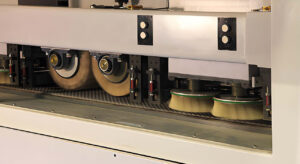
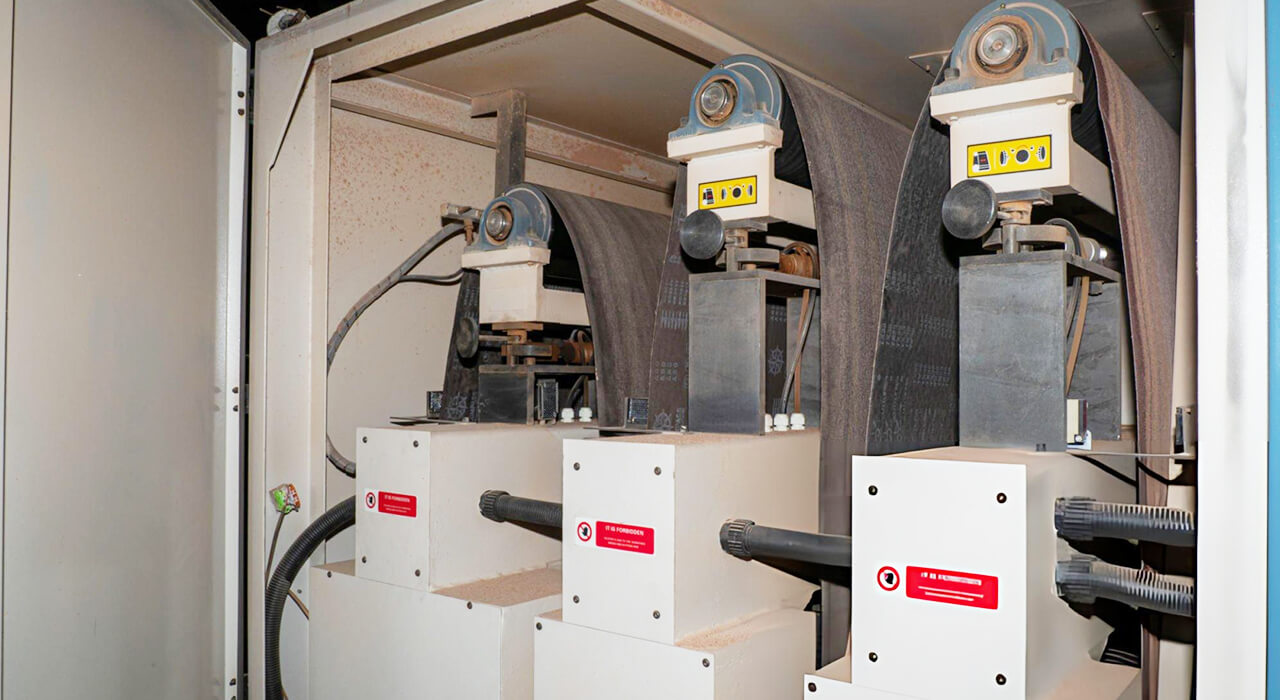
Wide Belt Sanding Machines are the one of most important machines in modern woodworking factories.
Many woodworking shops invest tens of thousands of dollars in a wide belt sander but overlook the importance of selecting the right abrasive belt.
According to the Wood Machinery Manufacturers of America (WMMA), sanding can account for up to 30% of total finishing preparation time in furniture manufacturing. Poor belt often results in:
- Surface Scratches
- Sanding Marks
- Burn Marks
- Uneven Thickness
- Higher Belt Consumption
- Increased Labor Costs
In fact, abrasive belts are often among the largest consumable expenses in cabinet, furniture, and panel production facilities. High quality belt can significantly reduce operating costs while improving throughput.
This guide explains everything you need to know about wide belt sanding belts.
Table of Contents
1. What Are Wide Belt Sanding Belts?
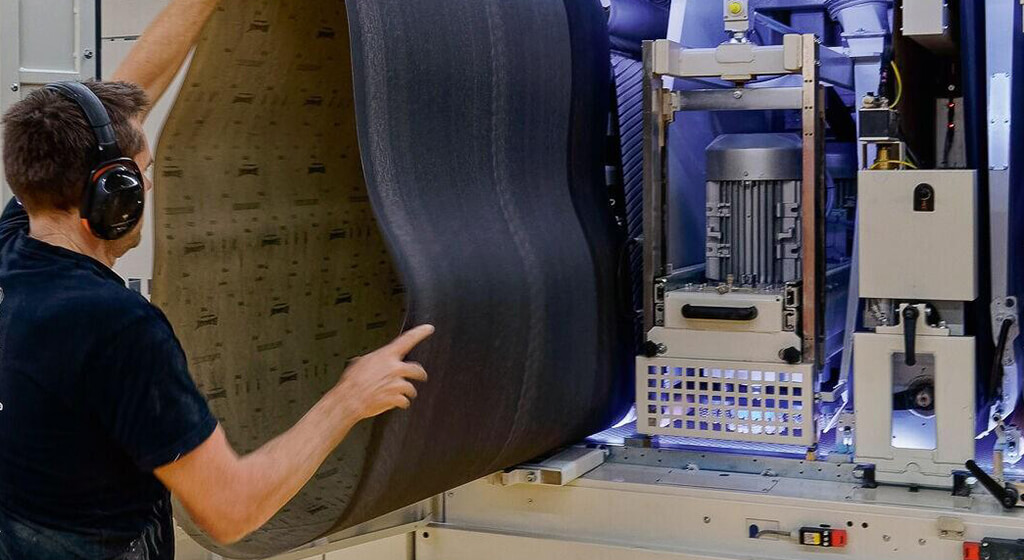
A wide belt sanding belt is an endless abrasive belt, which is used on wide belt sanding machines to sand wood panels, MDF, plywood, veneer, solid wood, particleboard, and composite materials.
They Consist Of Three Main Components:
|
Component |
Function |
|
Abrasive Grain |
Removes Material |
|
Backing Material |
Supports Abrasive |
|
Splice Joint |
Creates Endless Belt |
The abrasive grains are bonded to paper, cloth, or polyester backings using industrial adhesives. As the belt moves across rollers and platens, the abrasive removes material from wood surfaces to achieve thickness calibration and finishing.
Typical Belt Widths Include:
|
Machine Width |
Common Belt Size |
|
630mm |
650 × 1900mm |
|
1000mm |
1020 × 2200mm |
|
1100mm |
1120 × 2200mm |
|
1300mm |
1320 × 2200mm |
|
1600mm |
1620 × 2200mm |
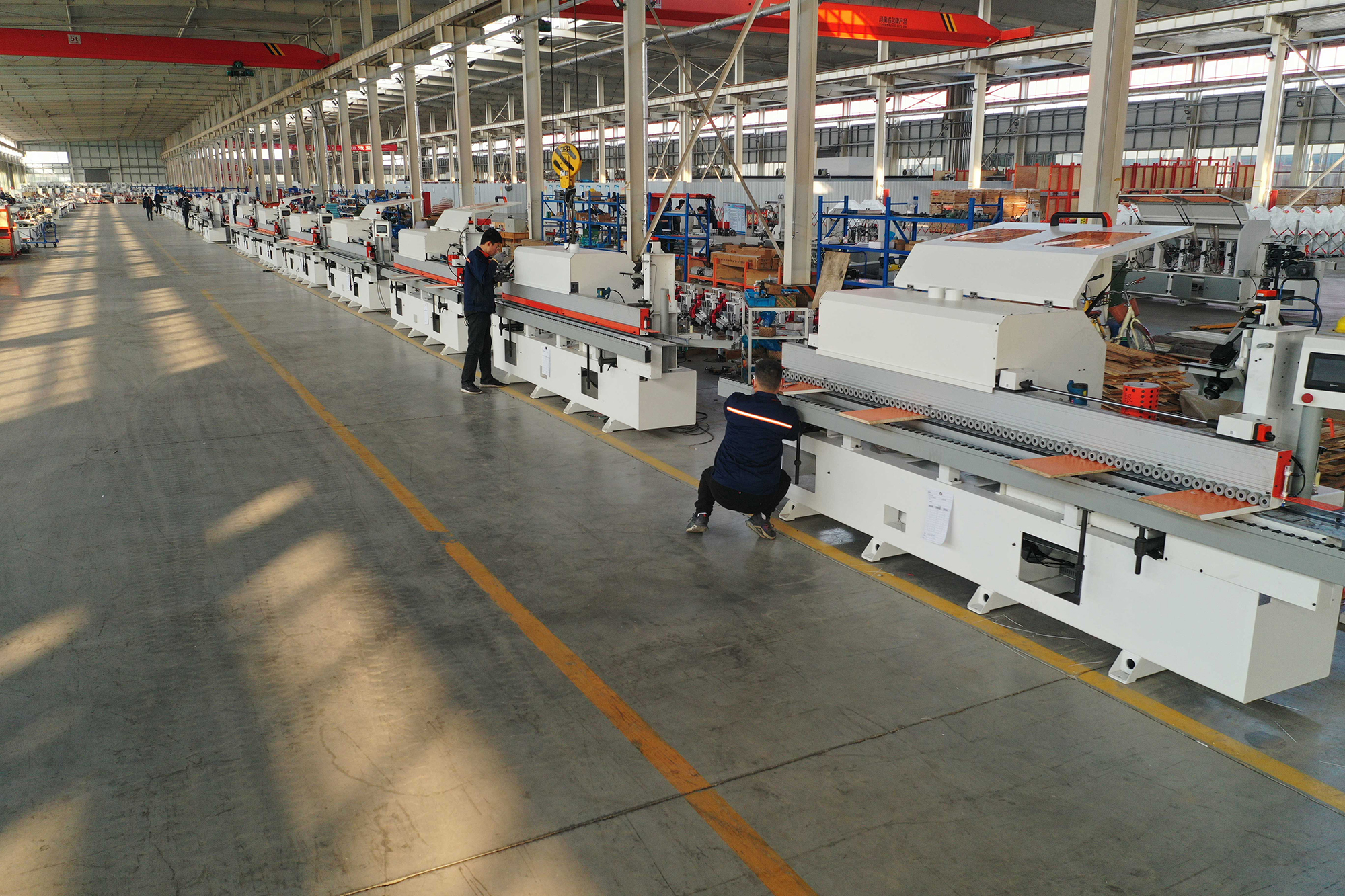
Different sizes are compatible with different wide belt sanding machines.
2. Types of Abrasive Materials
The abrasive material is the most important part of a wide belt sanding belt. It determines cutting speed, belt life, heat generation, surface finish quality, and overall sanding cost.
There are four most common abrasive materials used in wide belt sanding belts,
- Aluminum Oxide
- Silicon Carbide
- Zirconia Alumina
- Ceramic Grain.
2.1. Aluminum Oxide (AO)
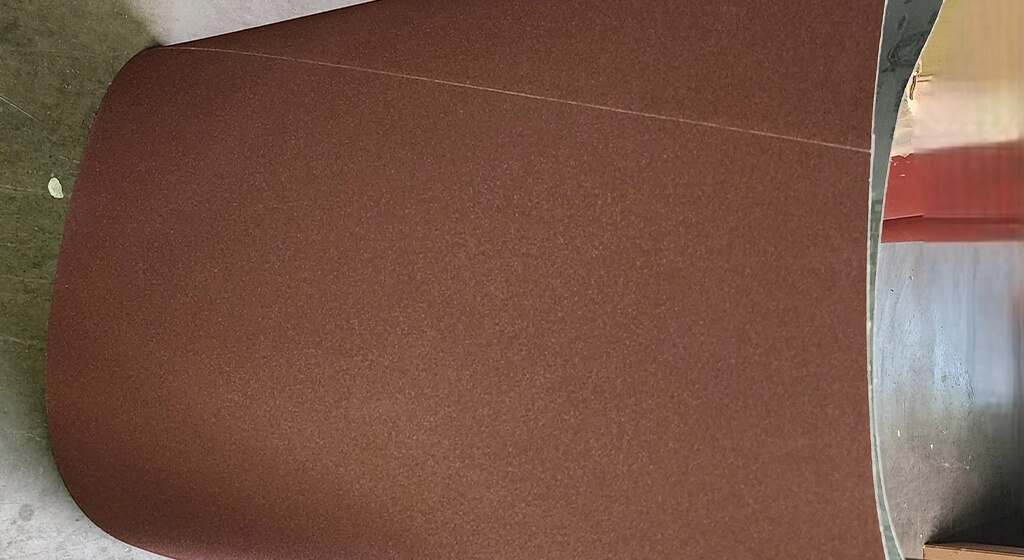
Aluminum Oxide is the most widely used abrasive material in the woodworking industry. It offers an excellent balance of performance, durability, and cost, making it the standard choice for furniture manufacturers.
The grain gradually fractures during use, exposing fresh cutting edges and extending belt life.
Advantages
- Affordable And Cost-Effective
- Good Durability
- Suitable For Most Wood Species
- Produces Consistent Sanding Results
- Available In All Grit Sizes
Disadvantages
- Shorter Lifespan Than Ceramic Abrasives
- Less Effective For Heavy Stock Removal
- Can Load Up When Sanding Resinous Woods
2.2. Silicon Carbide (SiC)
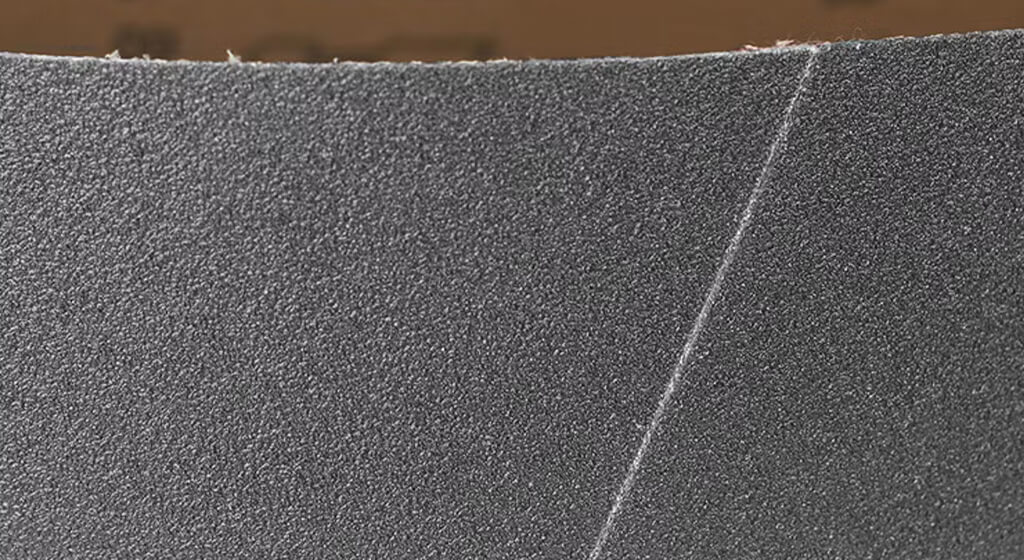
Silicon Carbide is an extremely sharp abrasive that cuts quickly and produces a very fine scratch pattern. It is particularly popular for sanding MDF, veneer, painted surfaces, and composite materials.
The grains are harder but more brittle than Aluminum Oxide, which allows them to create cleaner finishes.
Advantages
- Very Sharp Cutting Action
- Excellent Finish Quality
- Ideal For MDF And Veneer
- Reduced Scratch Visibility
- Produces Smooth Painted Surfaces
- More Brittle Than Aluminum Oxide
- Shorter Lifespan Under Heavy Pressure
- Less Suitable For Aggressive Stock Removal
2.3. Zirconia Alumina (ZA)
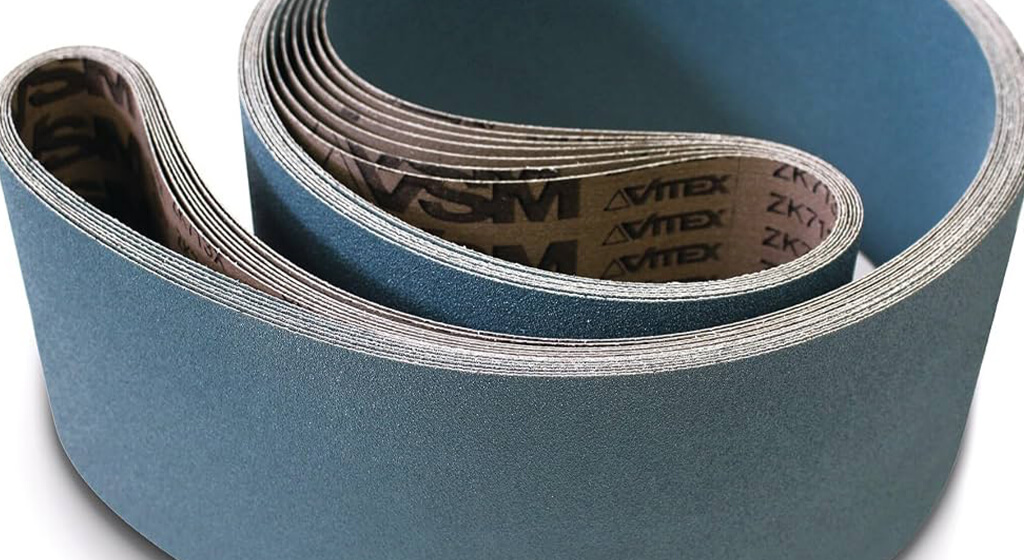
Zirconia Alumina is a premium abrasive designed for aggressive stock removal and heavy-duty sanding applications.
Its self-sharpening grain continuously fractures during operation, exposing new cutting edges. It can keep cutting performance longer than standard Aluminum Oxide.
Advantages
- Longer Lifespan Than Aluminum Oxide
- Excellent Stock Removal Rates
- Cooler Cutting Temperatures
- Reduced Downtime
- High Productivity
Disadvantages
- Higher Initial Cost
- May Be Unnecessary For Light Sanding Tasks
2.4. Ceramic Abrasive
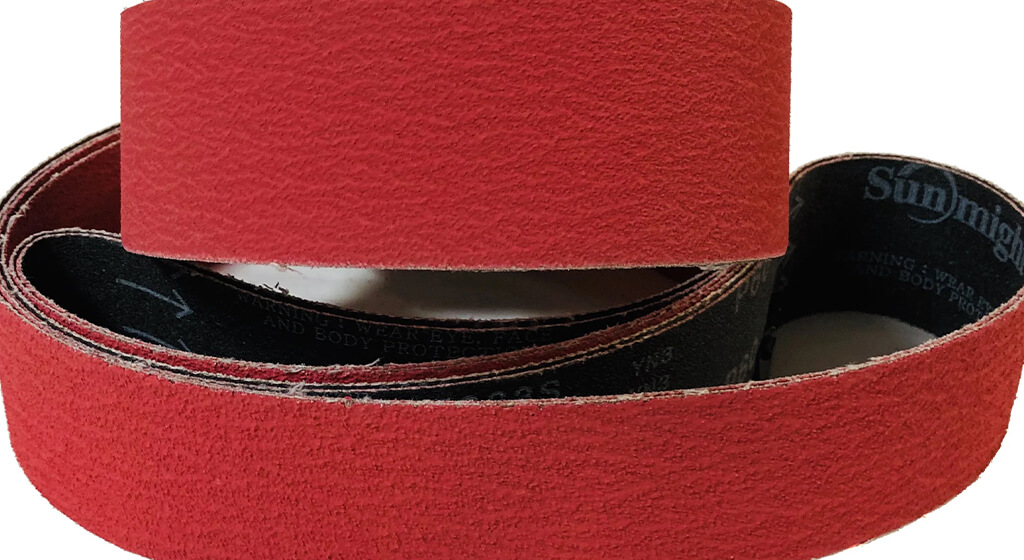
Ceramic abrasives is the highest-performance category of sanding materials currently available.
The micro-fracturing grain continuously exposes sharp cutting points during sanding, resulting in exceptional cutting efficiency, cooler operation, and significantly longer belt life.
Many large furniture factories have used ceramic abrasives to reduce abrasive consumption and maximize machine uptime.
Advantages
- Longest Belt Lifespan
- Fastest Cutting Speed
- Excellent Heat Resistance
- Reduced Loading
- Lower Cost Per Sanded Panel
- Highest Purchase Price
- Overkill For Low-Volume Shops
3. Understanding Sanding Belt Backings
3.1. Paper Backing
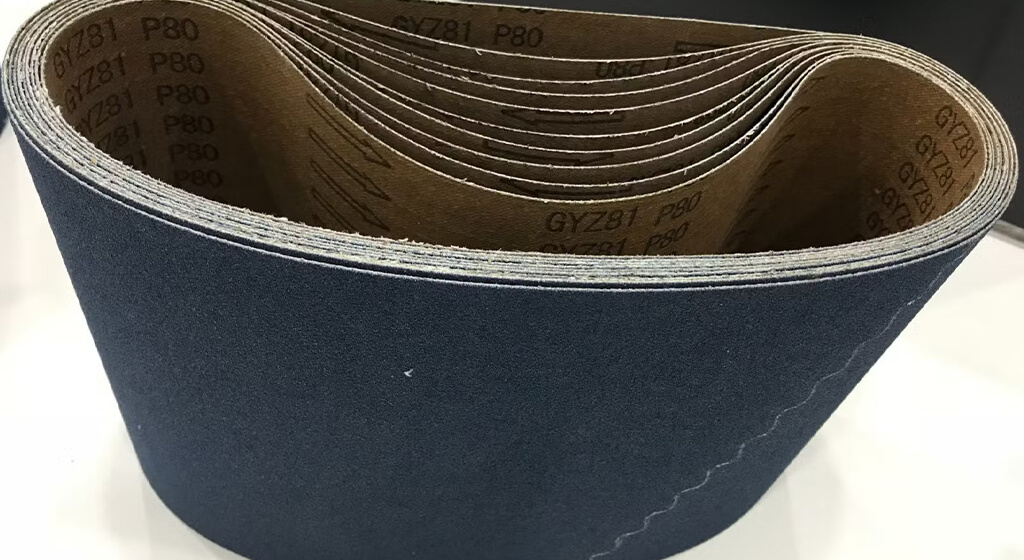
Paper backing is one of the oldest and most widely used abrasive backing materials.
It is made of specially treated paper designed to hold abrasive grains while providing flexibility and a smooth sanding action.
Paper-backed belts are commonly used for fine finishing applications where aggressive material removal is not required.
Advantages
- Lower Cost
- Excellent Surface Finish
- Good Flexibility
- Lightweight Construction
- Available In Very Fine Grits
- Less Durable Than Cloth
- Lower Tear Resistance
- More Susceptible To Moisture Damage
- Not Ideal For Heavy Stock Removal
3.2. Cloth Backing
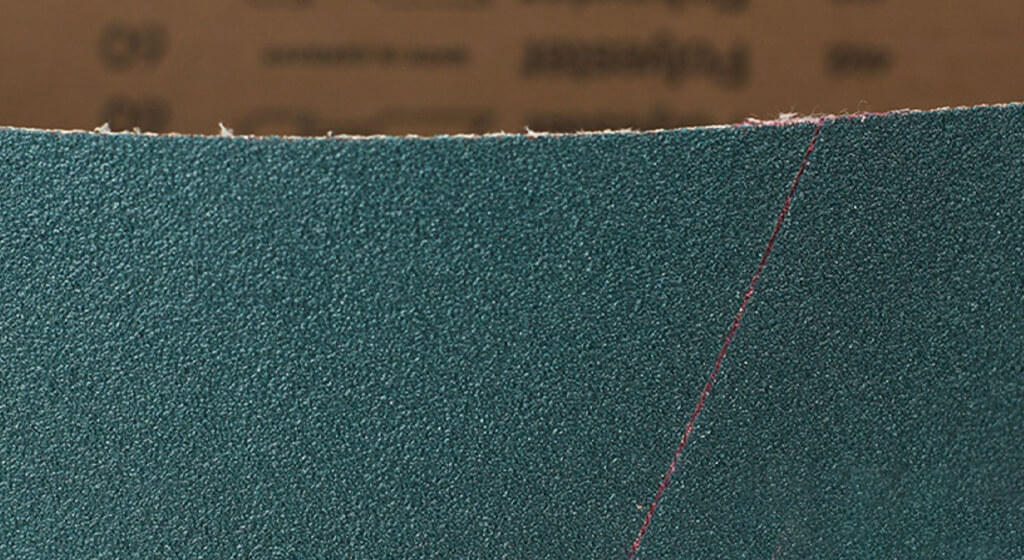
Cloth backing is the most common backing material used in industrial woodworking wide belt sanding belts.
It was made from cotton, polyester, or blended fabrics. It offers excellent durability, flexibility, and resistance to tearing.
Most cabinet and furniture manufacturers rely on cloth-backed belts for daily production.
Advantages
- High Strength
- Excellent Flexibility
- Good Heat Resistance
- Long Lifespan
- Resistant To Tearing
Disadvantages
- Higher Cost Than Paper
- Slightly Stiffer Than Paper Backing
3.3. Polyester Backing
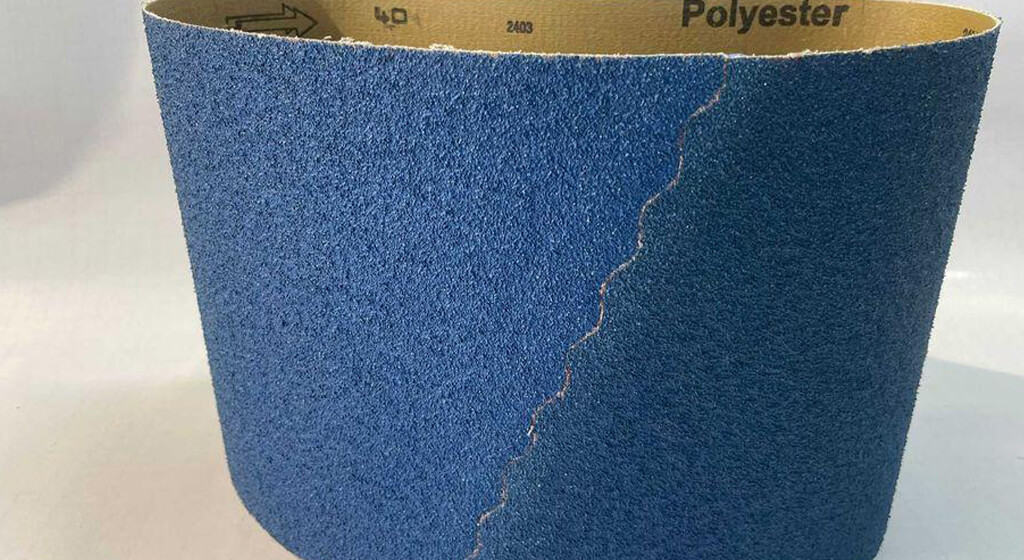
Polyester backing is engineered for heavy-duty industrial sanding applications. Polyester offers greater dimensional stability and higher tensile strength.
These belts are commonly used in automated production lines and high-volume manufacturing environments.
Advantages
- Exceptional Strength
- Excellent Dimensional Stability
- Long Service Life
- Resistant To Stretching
- Superior Tracking Performance
Disadvantages
- Higher Initial Cost
- Less Flexible Than Cloth
3.4. Film Backing
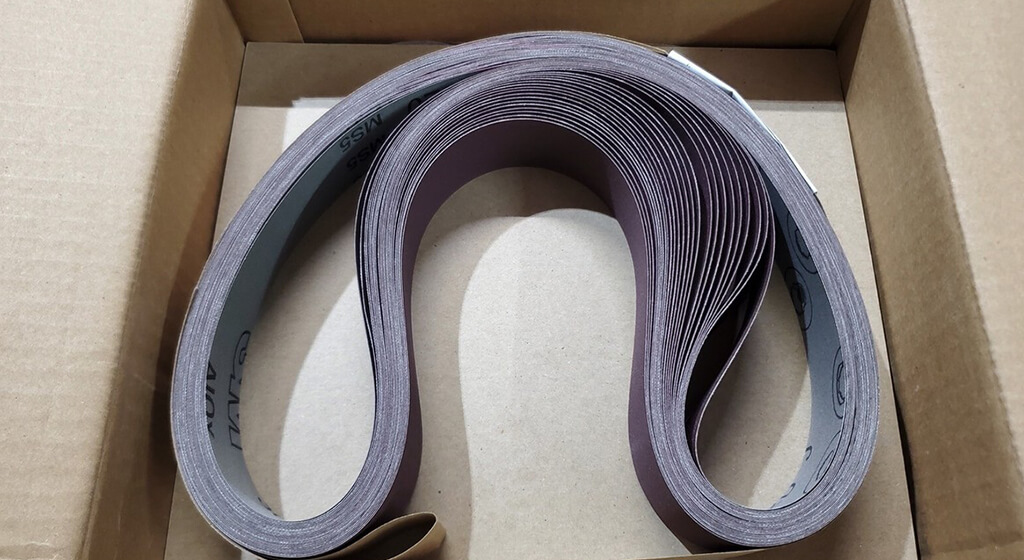
Film-backed abrasives use a thin polyester film instead of paper or cloth. The uniform thickness provides exceptional consistency and a highly controlled scratch pattern.
Film backings are typically used in specialty finishing applications rather than heavy sanding.
Advantages
- Uniform Thickness
- Precise Sanding Results
- Consistent Scratch Pattern
- Excellent Finish Quality
- Higher Cost
- Limited Stock Removal Capability
- Less Suitable For Rough Sanding
4. Wide Belt Sanding Grit Size
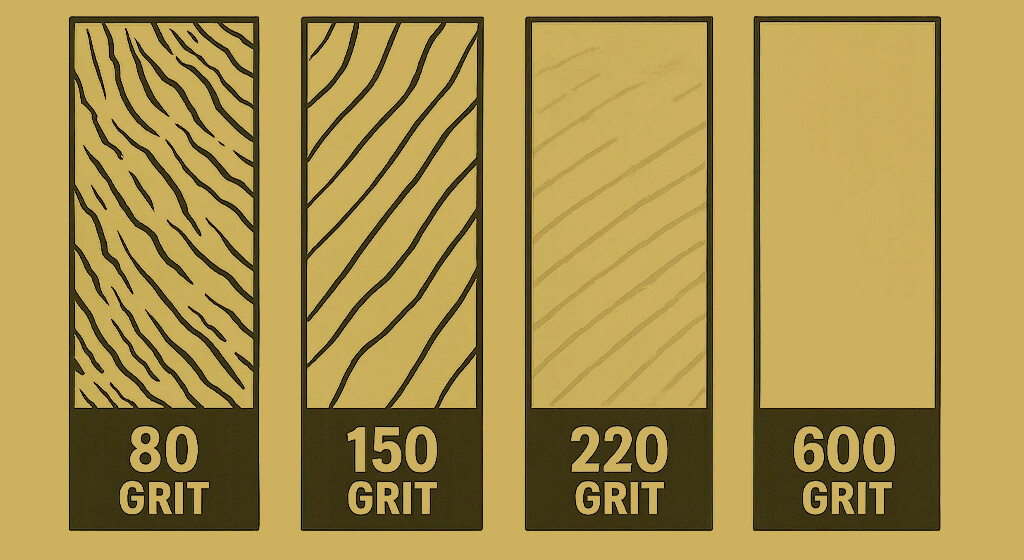
4.1. Coarse Grits (24–60)
These grits are designed for aggressive stock removal and thickness calibration.
Common Uses
- Removing saw marks
- Flattening warped panels
- Thickness calibration
- Heavy stock removal
- Preparing rough lumber
|
Grit |
Application |
|
24 |
Heavy calibration sanding |
|
36 |
Rapid material removal |
|
40 |
Rough dimensioning |
|
60 |
Initial surface leveling |
4.2. Medium Grits (80–150)
Medium grits are the most commonly used range in woodworking production. They balance stock removal and surface quality.
Common Uses
- Cabinet doors
- Furniture panels
- MDF processing
- Plywood sanding
|
Grit |
Application |
|
80 |
Surface preparation |
|
100 |
General woodworking |
|
120 |
Cabinet components |
|
150 |
Pre-finishing sanding |
4.3. Fine Grits (180–320)
Fine grits are primarily used to prepare surfaces for painting, staining, or finishing.
Common Uses
- Painted cabinet doors
- Veneer panels
- Fine furniture
- High-end woodworking
|
Grit |
Application |
|
180 |
Standard finishing |
|
220 |
Paint preparation |
|
240 |
Premium finishing |
|
320 |
High-gloss applications |
4.4. Recommended Final Grit Before Finishing
For Staining
|
Wood Type |
Final Grit |
|
Softwood |
150–180 |
|
Hardwood |
180–220 |
Going finer than 220 can reduce stain penetration and lead to uneven coloring.
For Painting
|
Surface |
Final Grit |
|
MDF |
220 |
|
Cabinet Doors |
220 |
|
Furniture |
220–320 |
For Clear Coating
|
Finish Type |
Final Grit |
|
Polyurethane |
180–220 |
|
Lacquer |
220–320 |
|
High Gloss |
320+ |
4.5. Quick Reference Grit Chart
|
Application |
Recommended Grit Sequence |
|
Rough Lumber |
40 → 80 → 120 |
|
Hardwood Furniture |
60 → 100 → 150 → 180 |
|
Cabinet Doors |
80 → 120 → 180 |
|
MDF for Painting |
120 → 180 → 220 |
|
Veneer Panels |
120 → 150 → 180 |
|
Plywood |
80 → 120 → 180 |
|
High-Gloss Finish |
180 → 220 → 320 |
5. Troubleshooting and Belt Longevity Optimization
5.1. The Importance of Climate Control (Storage)
Abrasive belts are highly hygroscopic. They absorb and release moisture from the air.
- Too Dry (< 35% RH): Backing materials (especially paper) become brittle, leading to edge curling, tracking issues, and catastrophic cupping or tearing.
- Too Humid (> 65% RH): Resins can soften, causing premature grain shedding, while cloth backings stretch and slip on driving drums.
Industry Standard Storage Conditions: Store wide belts in a controlled environment at 18°C to 22°C (64°F to 72°F) and 45% to 55% relative humidity. Always hang belts on pegs or non-metallic cylinders for at least 24 hours prior to use to allow them to acclimate and lose their shipping “set.”
5.2. Common Failure Modes and Solutions
|
Symptom |
Root Cause |
Corrective Action |
|
Premature Loading (Clogging) |
Excess heat, wrong coat type, lack of anti-static properties. |
|
|
Belt Tracking Issues |
Uneven moisture absorption or worn machine conveyor/rollers. |
|
|
Telegraphing / Chat Markings |
Imperfect belt joint (splice) or damaged contact roller. |
|
|
Burn Marks on Workpiece |
Dull abrasive grains or feed speed is too slow. |
Increase feed speed or switch to a self-sharpening Ceramic or Zirconia grain. |
6. Conclusion
The correct wide belt sanding belt is one of the most important decisions in woodworking production.
For most woodworking applications:
- Aluminum Oxide remains the best all-around choice.
- Silicon Carbide excels on MDF and veneer.
- Zirconia and Ceramic provide superior performance for heavy stock removal and high-production environments.
Most importantly, avoid skipping grit levels, maintain proper dust extraction, monitor belt wear, and store belts correctly.
These simple practices can extend abrasive life, improve surface quality, and significantly lower production costs.