Handleless cabinet doors have become a major trend in modern kitchen design. They are widely used in residential and commercial projects.
As NKBA reported, 60% think Contemporary/Modern Minimalism will be trendy in the next three years. As an industry-standard requirement for modern residential spaces, handleless cabinet doors cater to this trend perfectly.
In this article, we will explore the handleless cabinet door types, features, and so on.
Table of Contents
1. What Are Handleless Cabinet Doors And Type?
Handleless cabinet doors are modern cabinetry systems without external handles or knobs.
They use integrated opening mechanisms instead. There are three main types, push-to-open, J-pull, gola profiles,and finger pull.
These designs create a clean, continuous surface. They are widely used in contemporary kitchens and commercial interiors. Demand has increased significantly in modern European and North American kitchen markets.
1.1. Push-to-Open System (Mechanical / Spring / Magnetic)
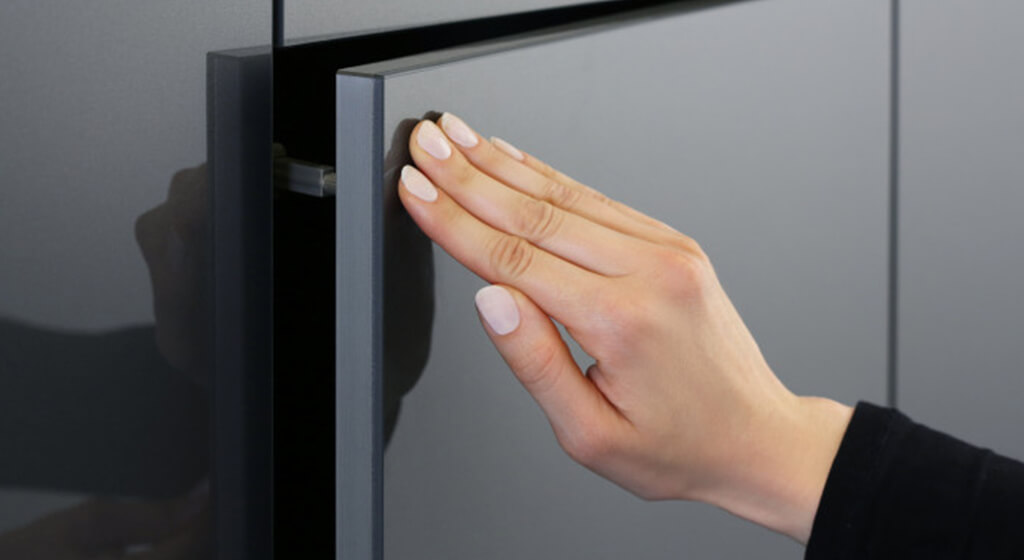
Push-to-open is the most widely used handleless solution in modern kitchens. It uses mechanical or magnetic ejectors behind the door. When pressed, the door pops open without a handle.
This system was used widely in mass production furniture and modular kitchens. It depends heavily on hinge precision and cabinet alignment.
Key Features:
- No Visible Handle
- Requires Precise Installation
- Works With Soft-Close Hinges
Common Issues:
- Accidental Opening
- Weak Rebound Over Time
- Sensitivity to Dust And Misalignment
1.2. Gola Profile System (Aluminum Rail Handle System)
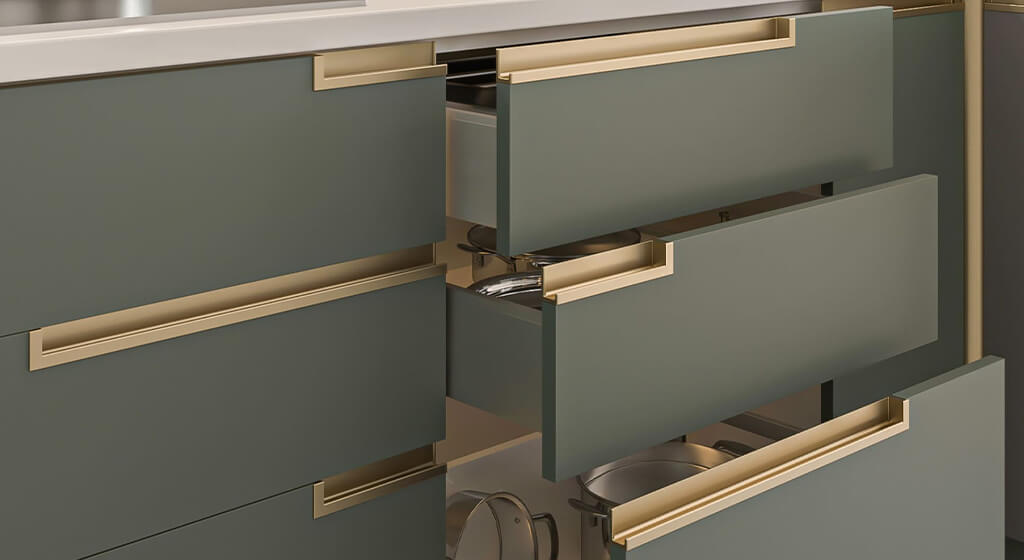
Gola systems use aluminum channels installed between doors or drawers. Users grip the recessed channel to open the cabinet. It is considered a premium European kitchen design solution. It is widely used in modern minimalist interiors.
Key Features:
- Continuous Clean Surface
- Available In Vertical Or Horizontal Profiles
- High-End Appearance
Common Issues:
- Dust And Grease Accumulation Inside Channels
- Reduced Internal Drawer Space
- Higher Installation Cost
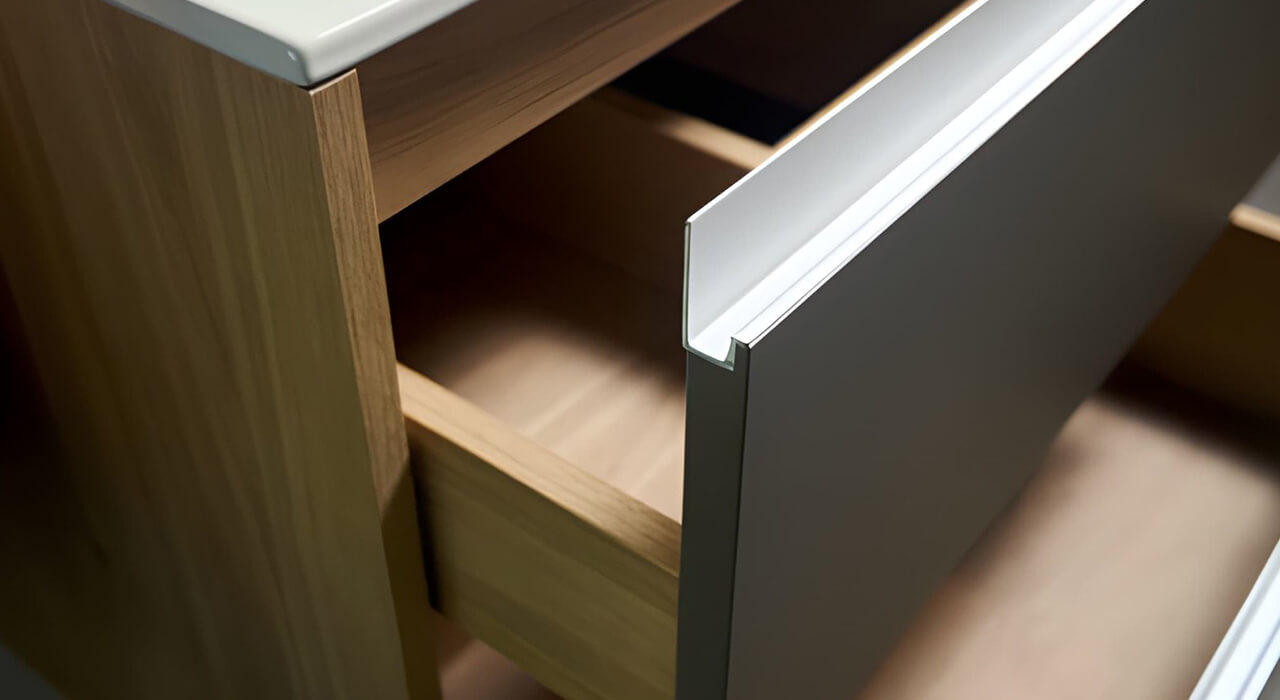
1.3. J-Pull (Integrated Handle Profile)
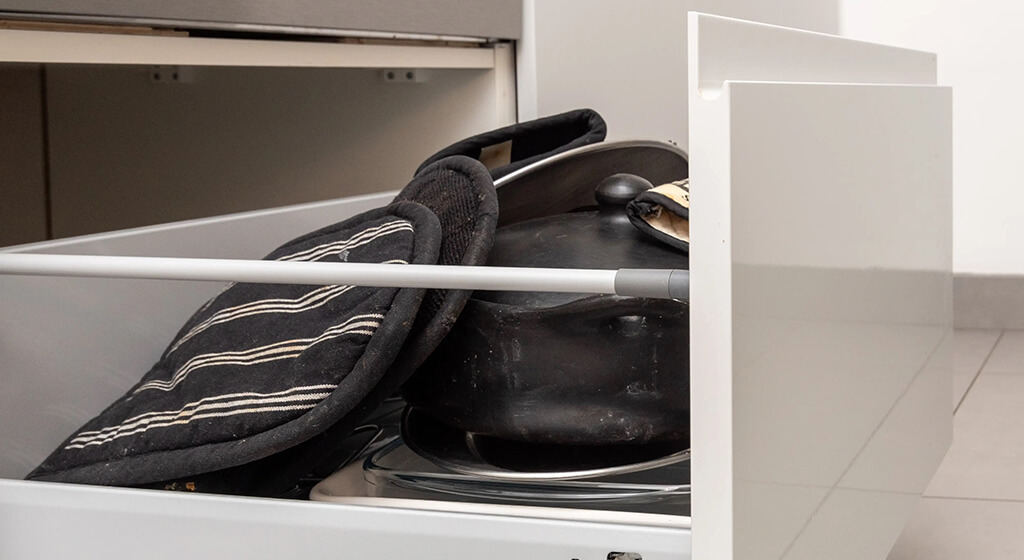
J-pull cabinets are CNC-machined with a curved or angled groove at the edge of the door. This creates a built-in “finger grip.” It is popular in mid-range modern kitchens due to lower hardware cost.
Key Features:
- No External Hardware Required
- CNC-Machined Groove
- Cost-Effective Compared To Gola
Common Issues:
- Edge Chipping (Especially MDF)
- Limited Ergonomic Comfort For Some Users
- Depends Heavily On Machining Precision
1.4. Finger Pull / Rebated Edge System
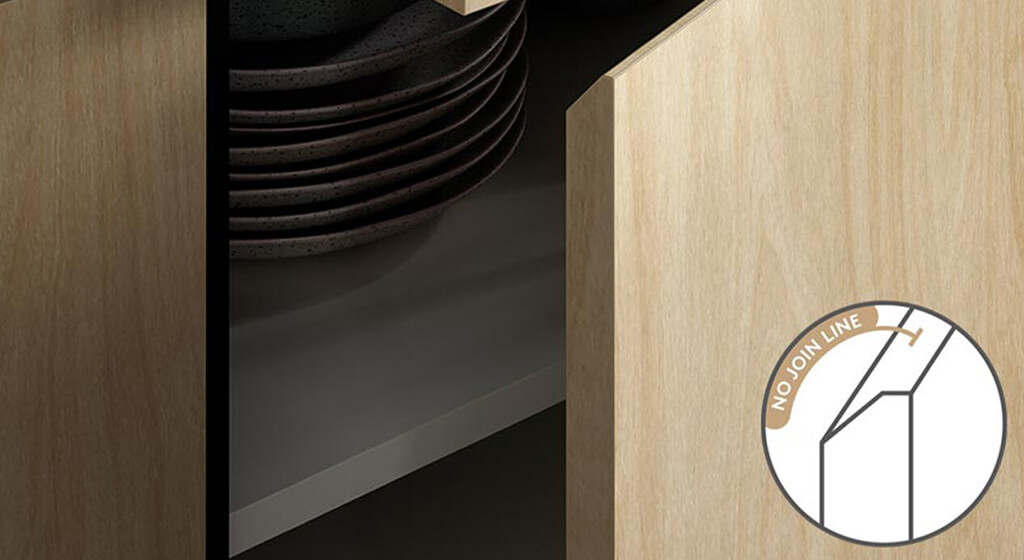
Finger Pull uses a simple recessed cut or routed edge on the cabinet door. It is the most basic form of handleless design. It is often used in budget kitchens or DIY projects.
Key Features:
- Very Low Cost
- Easy To Manufacture
- No Hardware Required
Common Issues:
- Less Durable Finish
- Visible Wear Over Time
- Limited Design Refinement
2. What Are Materials Used in Handleless Cabinets?
Handleless cabinets depend heavily on material performance because there are no external handles to “hide” imperfections. Every surface is visible and continuously touched. That means durability, edge banding quality, and coating stability matter more than in traditional cabinetry.
Below is a clear breakdown of the most commonly used materials in modern handleless cabinet production.
2.1. MDF
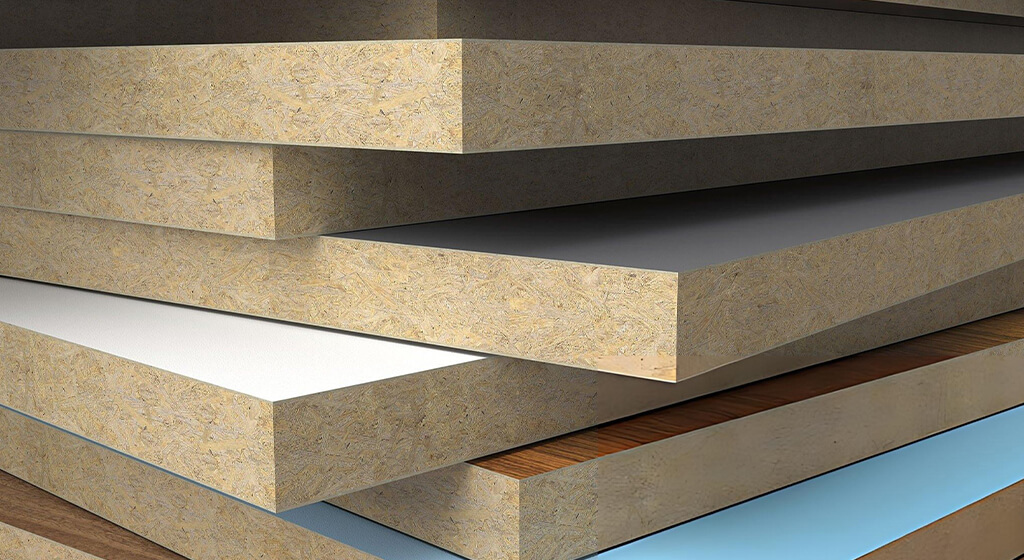
MDF is the most widely used core material in handleless cabinet manufacturing. It is made from wood fibers pressed with resin under high pressure.
Its biggest advantage is surface smoothness. It makes it ideal for painting, laminating, and CNC machining grooves for J-pull designs. MDF also provides stable density, which reduces warping.
2.2. Plywood
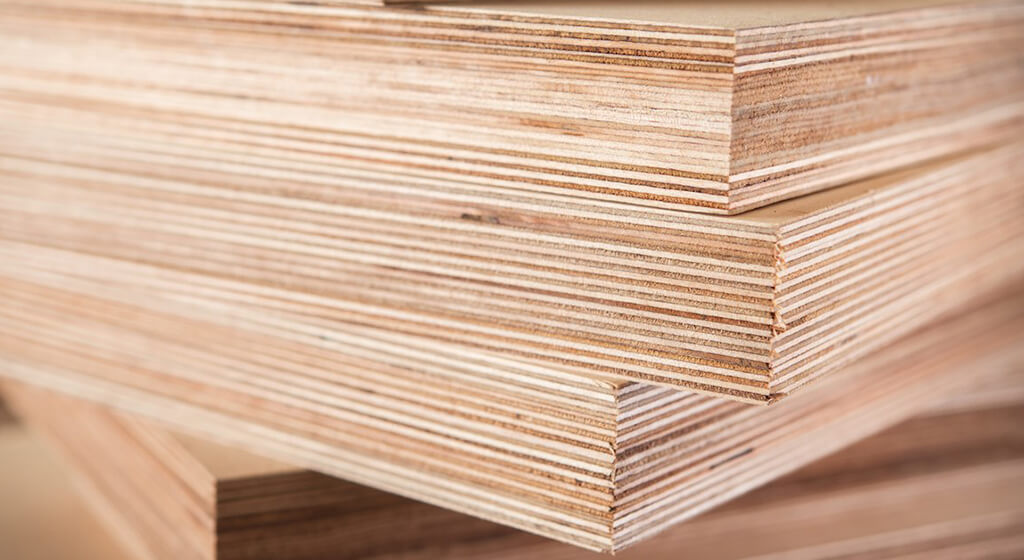
Plywood is another major material used in handleless cabinets, especially in higher-end or moisture-prone environments like kitchens.
It is made from multiple layers of wood veneer bonded together with alternating grain directions. This structure provides excellent strength and dimensional stability.
Plywood performs better than MDF in humid conditions, making it suitable for premium cabinetry systems.
However, its surface is less smooth than MDF, which can increase finishing complexity for high-gloss or ultra-matte handleless designs.
2.3. Particle Board
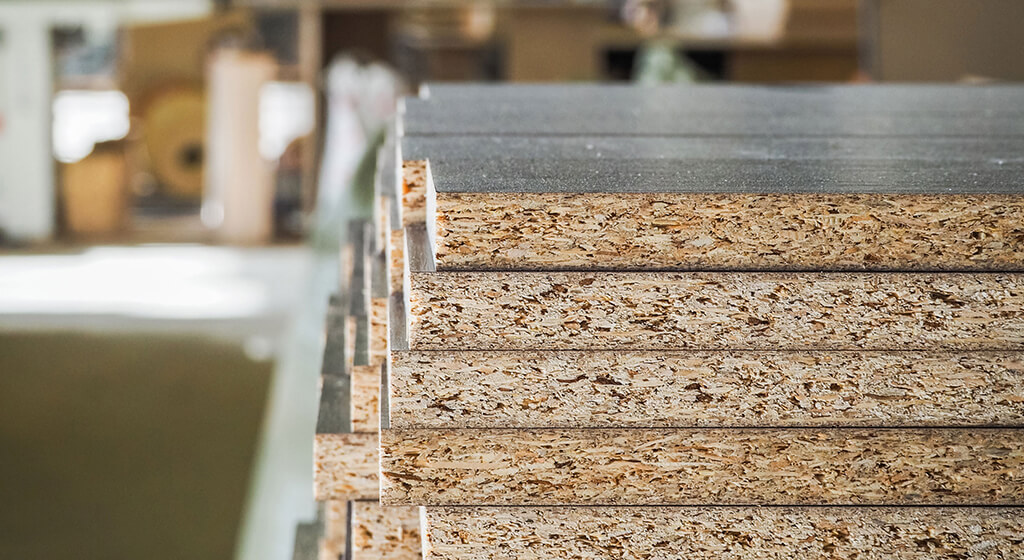
Particle board is the most cost-effective material used in mass-market cabinetry. It is made from wood chips and resin pressed into sheets.
It is widely used in modular kitchen systems due to low cost and easy availability.
In handleless cabinet production, particle board is usually laminated with melamine or PVC foil to improve appearance and durability.
However, it has lower screw-holding strength compared to MDF or plywood. It is also more vulnerable to moisture damage.
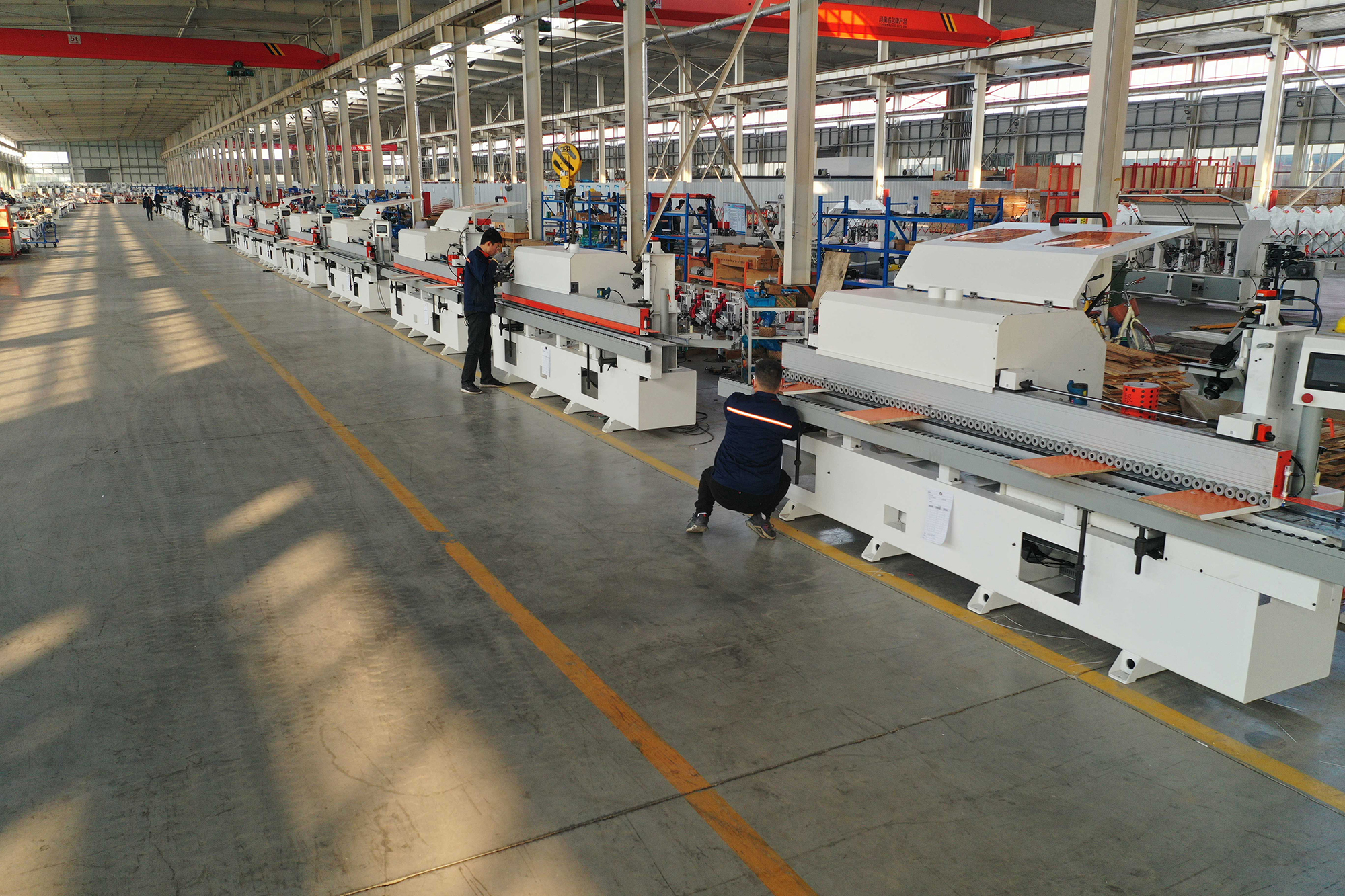
3. What Machine We Need When We Process Handleless Cabinet Door?
When producing handleless cabinet doors, the required machines depend on the system type. However, in real factory setups, the workflow is quite consistent.
Below is a practical production machine list used in cabinet factories worldwide, based on actual CNC furniture manufacturing lines.
3.1. CNC Router / Nesting CNC Machine
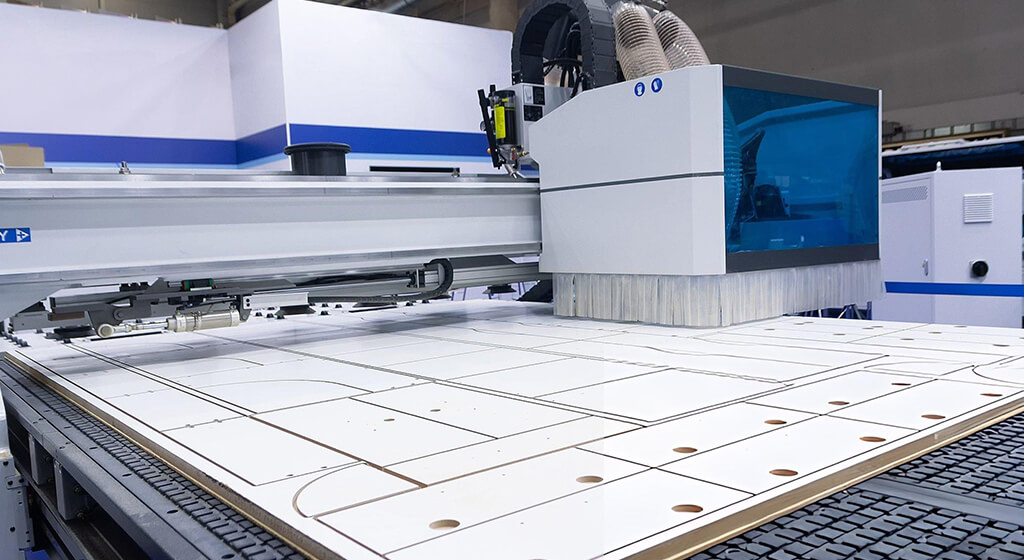
CNC Nesting Router Machine is the most important machine in handleless cabinet production. It is used to cut panels, drill grooves, and create handleless profiles such as J-pull or finger pulls.
Modern factories can accomplish full sheet cutting automatically by CNC nesting lines. Precision is critical because handleless designs require tight tolerances.
Used For:
- Cabinet Door Cutting
- J-Pull Groove Machining
- Handleless Edge Profiling
- Drilling Hinge Holes
3.2. Edge Banding Machine
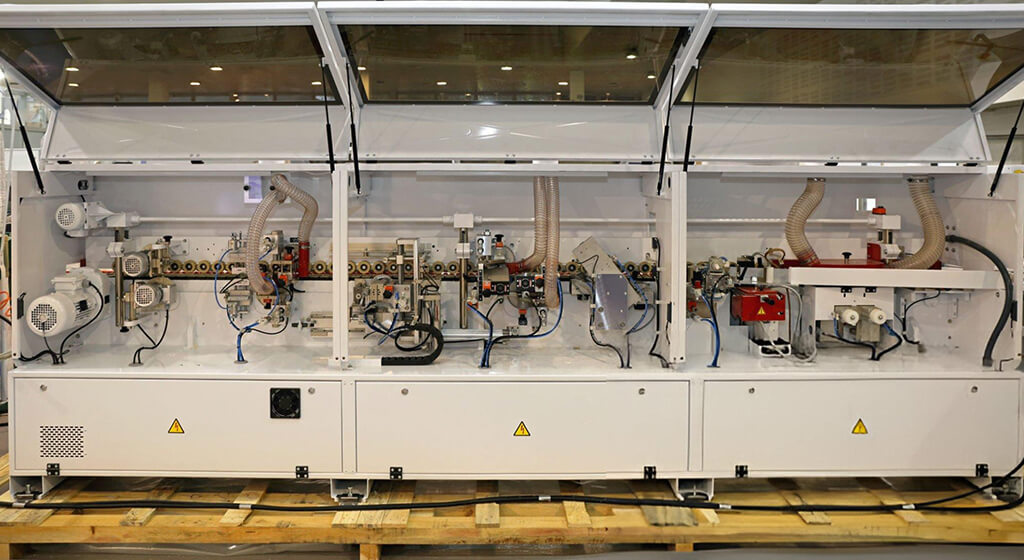
Edge Banding is essential for all handleless cabinet doors, especially MDF-based J-pull systems. It protects edges from moisture and chipping.
High-end factories uses PUR hot-melt edge banding machines to get a better bonding strength and heat resistance. And laser edge banding machines was used widely in the process of high-end furniture manufacturing.
Our 45-degree bevel edgebander can handle finger-pull edgebanding, while our soft-forming edgebander is suitable for J-pull profiles.
Used For:
- PVC / ABS Edge Banding
- Moisture Protection
- Decorative Finishing
Important for Handleless Designs: Poor edge banding is one of the top failure reasons in J-pull cabinets (peeling and cracking).
3.3. Panel Saw or Beam Saw
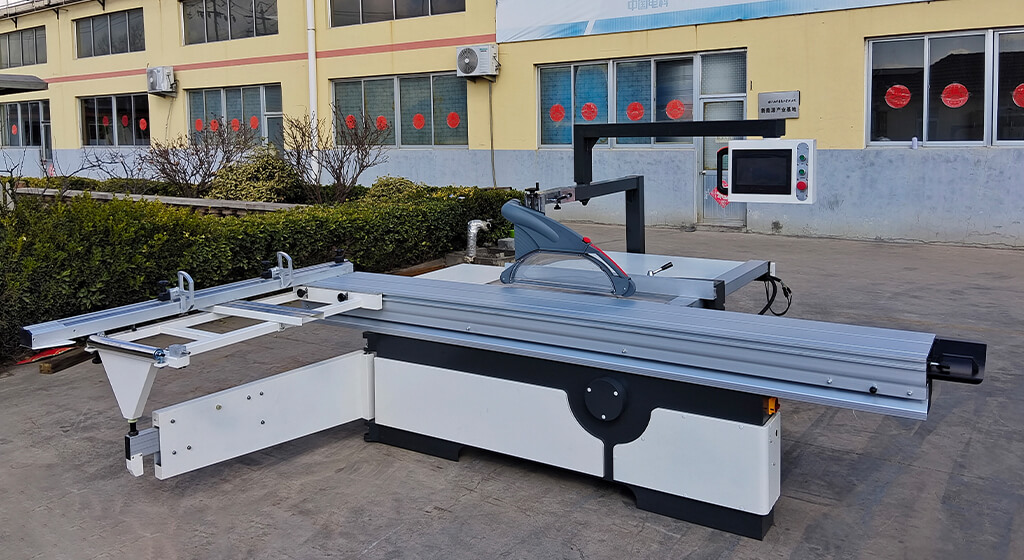
Before CNC machining, raw boards are cut into standard panel sizes.
A sliding table panel saw or CNC beam saw can improve cutting efficiency and reduce material waste.
Used For:
- Cutting MDF, Plywood, Particle Board
- Preparing Sheets For CNC Nesting
- Batch Production Sizing
This step is important for large-scale production accuracy.
3.4. Drilling Machine / CNC Boring Machine
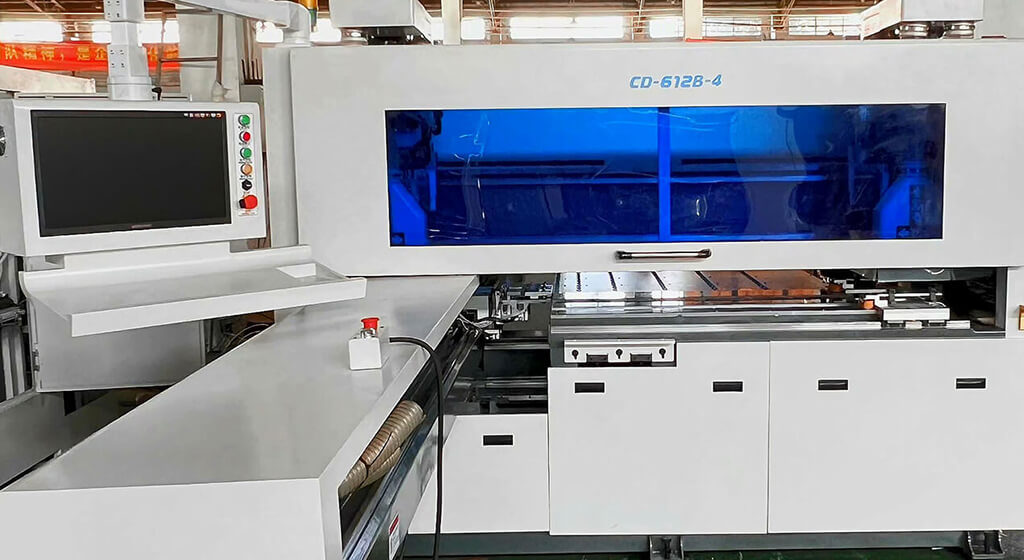
Handleless cabinets still require hinge holes and system installation holes. A multi-spindle drilling machine or CNC boring center ensures consistent alignment.
Used For:
- Hinge Cup Drilling (35mm Standard)
- Shelf Pin Holes
- Drawer Rail Installation Holes
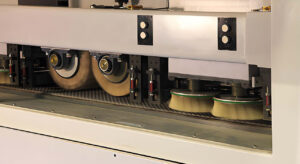
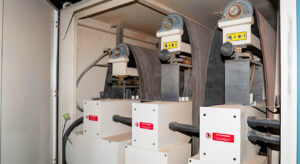
3.5. Sanding Machine (Wide Belt Sander)
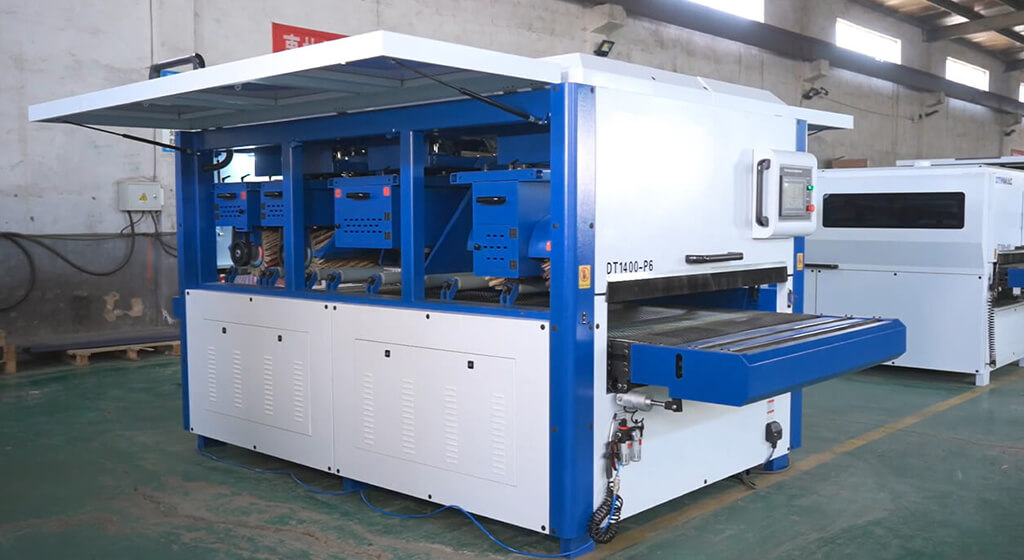
Wide Belt Sander Machine ensures smooth surfaces before painting or lamination. Handleless cabinets require higher surface quality because edges are visible and tactile.
Used For:
- Surface Leveling
- Pre-Paint Preparation
- Edge Smoothing For J-Pull Grooves
4. Engineering Precision and Manufacturing Standards
Premium handleless cabinetry requires exceptional precision, and strict tolerance management. Slight misalignments look highly pronounced on flat, continuous surfaces.
When engineering True Gola systems, millworkers must modify the cabinet carcass side panels to accept the aluminum profile. This structural modification is typically completed on CNC nesting router machine.
The precise recess route must match the exact dimensions of the specified extrusion, which is usually 25-55mm.
|
True Gola Carcass Cutout Tolerances |
|
|
Dimension Parameter |
Target Metric Allowance |
|
Vertical Milling Depth |
25.0 mm (+/- 0.2 mm) |
|
Horizontal Channel Recess |
55.0 mm (+/- 0.3 mm) |
|
Cabinet Front Reveal Gap |
3.0 mm (+/- 0.5 mm) |
5. What Is The Handleless Cabinet Door Issue?
5.1. Doors Not Closing Properly
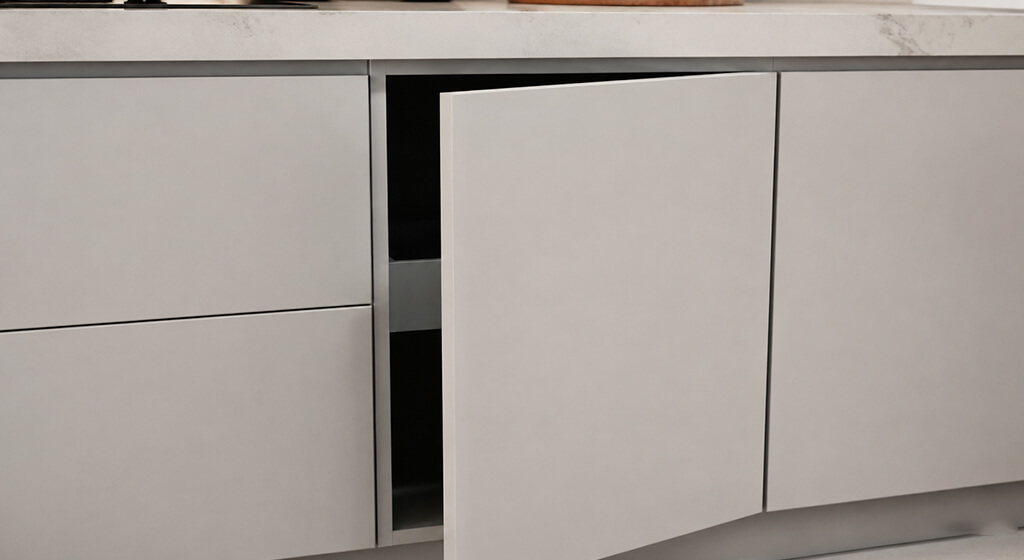
Misalignment is the most common problem in handleless cabinets. Because there is no handle, the door must sit perfectly flush. Even a small deviation causes problems.
Typical Symptoms:
- Door Sticks Out Slightly
- Uneven Gaps Between Doors
- Doors Collide When Closing
Main Causes:
- Incorrect Hinge Adjustment
- Cabinet Frame Not Square
- Panel Cutting Tolerance Errors
5.2. Push-to-Open Failure
Push-to-open systems are widely main problem.
Common Symptoms:
- Door Does Not Pop Open
- Door Opens By Itself
- Weak Rebound Force
Causes:
- Weak Spring Mechanism
- Dust Inside Ejector
- Incorrect Installation Depth
5.3. Gola Profile Dirt & Cleaning Problems
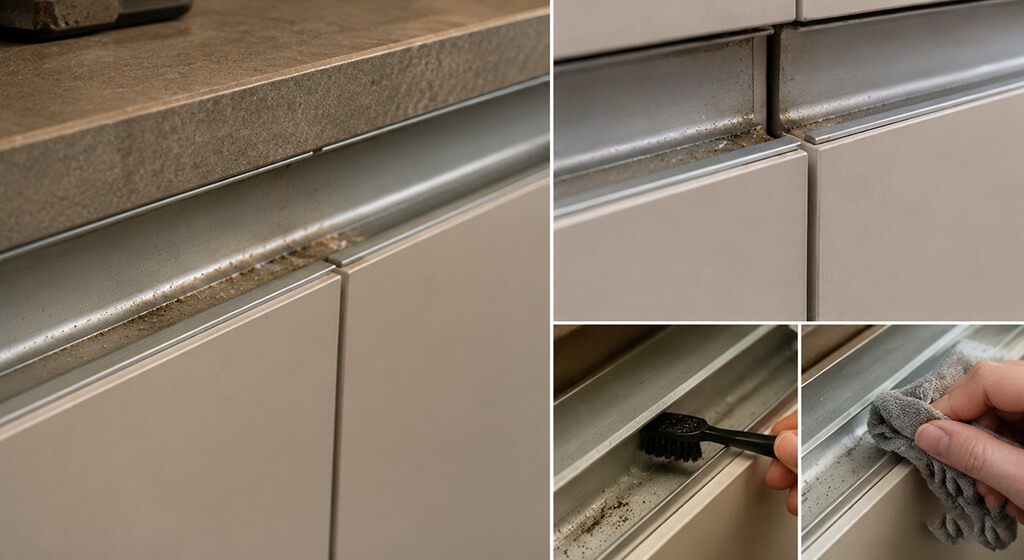
Gola handle systems create a recessed aluminum channel. While visually clean, users often report maintenance issues.
Problems:
- Dust Buildup Inside Channels
- Grease Accumulation In Kitchens
- Difficult Cleaning In Narrow Gaps
This issue is especially common in cooking-heavy environments.
5.4. Edge Chipping in J-Pull Cabinets
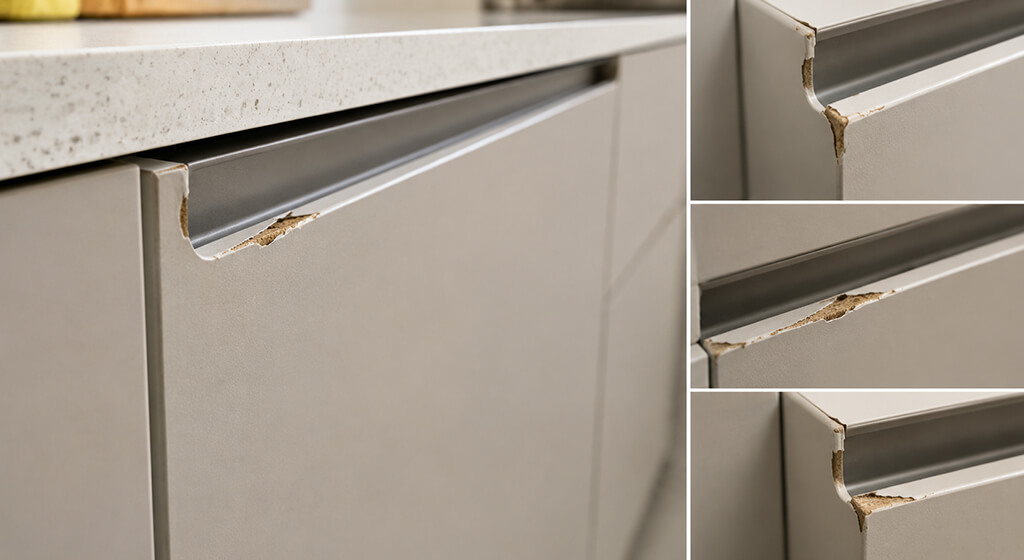
J-pull systems use CNC-routed grooves instead of hardware. It makes edge quality extremely important.
Symptoms:
- Chipped Edges After Machining
- Cracking At Groove Corners
- Paint Peeling On MDF Surfaces
Main Causes:
- Poor CNC Cutting Quality
- Low-Density MDF Material
- Weak Edge Banding Adhesion
5.5. Installation Sensitivity Problems
Handleless cabinets require much higher installation precision than traditional cabinets.
Problems:
- Small Errors Cause Large Visual Defects
- Requires Professional Adjustment Tools
- Time-Consuming Alignment Process
This is one of the biggest reasons installers prefer traditional handles.
6. Cleaning and Maintenance of Handleless Cabinet Doors
6.1. Daily Cleaning
Daily cleaning mainly focuses on visible surfaces such as door panels and drawer fronts. Handleless cabinets often use matte lacquer, high-gloss finish, or laminated MDF. These surfaces easily show fingerprints, especially in kitchens.
Use a soft microfiber cloth with mild detergent solution. Avoid abrasive sponges, as they can damage coatings.
6.2. Cleaning Gola Profile Systems
Gola systems are visually clean but mechanically difficult to maintain. The aluminum channel collects grease, dust, and crumbs over time, especially near cooking areas.
Use a narrow brush or compressed air to remove debris. Then wipe with a mild degreasing solution. Avoid strong acids or alkaline cleaners, as they may damage anodized aluminum finishes.
6.3. Push-to-Open Mechanism Maintenance
Push-to-open systems rely on internal spring or magnetic ejectors. These components are sensitive to dust and misalignment.
Clean the trigger area regularly with a dry cloth. Do not apply oil or grease unless specified by the manufacturer. Lubricants can attract dust and reduce performance.
6.4. Cleaning J-Pull Grooves
J-pull cabinets use CNC-routed grooves instead of external handles.
Dust and grease accumulate inside the recessed channel. Clean using a soft brush or vacuum nozzle. For stubborn dirt, use a damp cloth wrapped around a thin cleaning tool.
Avoid excessive water exposure. MDF-based J-pull doors can swell if moisture enters the groove.
6.5. Fingerprints and Surface Stain Control
Handleless cabinets show fingerprints more than traditional designs. Matte black, dark grey, and high-gloss white surfaces are especially sensitive.
To Reduce Marks:
- Use Anti-Fingerprint Coatings When Possible
- Clean With Microfiber Cloth Only
- Avoid Oil-Based Cleaners
Many interior design studies note that matte finishes reduce glare but increase visible smudges in high-touch environments.
6.6. Deep Cleaning Routine
A deeper cleaning cycle helps maintain long-term performance.
Steps:
- Remove Dust From Grooves And Channels
- Clean Hinge Areas And Internal Cabinet Edges
- Inspect Push Mechanisms For Debris
- Check For Loose Screws Or Fittings
This routine helps prevent long-term mechanical failure and surface degradation.
7. Conclusion
Handleless cabinets rely heavily on engineered materials rather than solid wood alone. MDF dominates due to machining precision, while plywood and veneers serve high grade markets.
Surface materials like acrylic, HPL, and paint define visual quality, while edge banding and aluminum profiles ensure functional performance.
In modern cabinetry, material selection is not just about cost—it directly determines durability, aesthetics, and the success of the handleless design system.