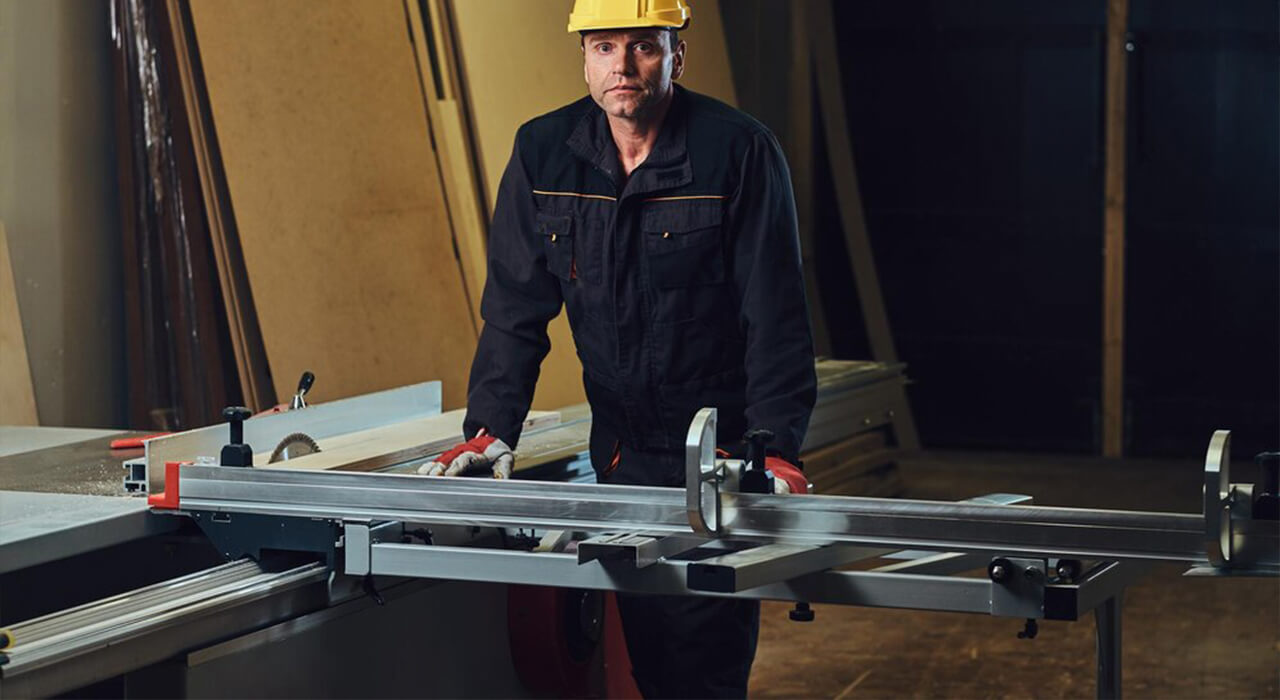
Sliding Table Saw is one of the most valuable machines in modern woodworking. It delivers precise cuts, higher productivity, and improved safety. That is why many furniture factories rely on it daily.
According to NLM reported, over 30,000 table saw injuries occur annually. Fingers and hands are the most frequently injured body part and lacerations are the most common injury. Medical costs for the treatment of table saw injuries are estimated at more than $2 billion every year.
People will pay attention to safer cutting. A sliding table saw helps reduce operator exposure to dangerous cutting positions.
In this in-depth article, we’ll explore the core benefits of sliding table saws, outline must-have features and technologies, and present a detailed comparison of the top 10 brands on the market today.
Let’s get started!
Table of Contents
1. What is Sliding Table Saw?
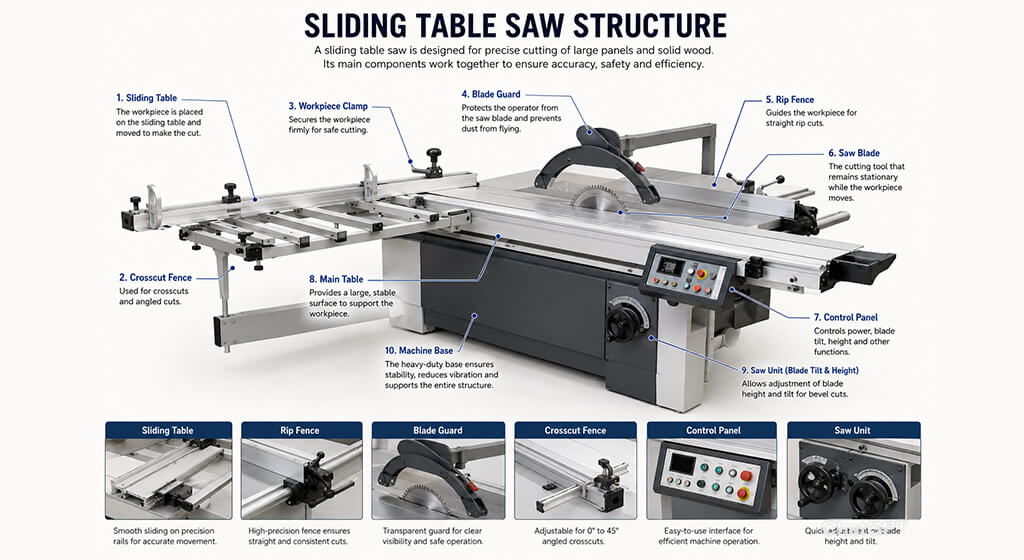
Sliding Table Saw is designed for accurate cutting of plywood, MDF, particleboard, solid wood panels, and furniture components.
The machine consists of several key parts:
|
Component |
Function |
|
Sliding Table |
Moves the workpiece smoothly past the
blade for precise and safe cutting. |
|
Main Saw Blade |
Performs the primary cutting operation.
Usually adjustable for height and angle. |
|
Cuts the bottom veneer layer first to
prevent chipping on laminated panels. |
|
|
Rip Fence |
Guides material for accurate rip cuts. |
|
Crosscut Fence |
Provides angle and length references for
crosscutting operations. |
|
Outrigger Table |
Supports large panels during cutting. |
|
Extension Table |
Increases support area for oversized
workpieces. |
|
Saw Blade Arbor Unit |
Holds and drives the main blade. |
|
Tilt Mechanism |
Allows blade tilting, commonly from 0° to
45°. |
|
Motor System |
Powers the main blade and scoring blade. |
|
Dust Collection Port |
Removes sawdust and improves visibility
and safety. |
|
Control Panel |
Controls blade height, tilt angle,
scoring blade, and machine settings. |
2. Why It Is Worth To Invest A Sliding Table Saw?
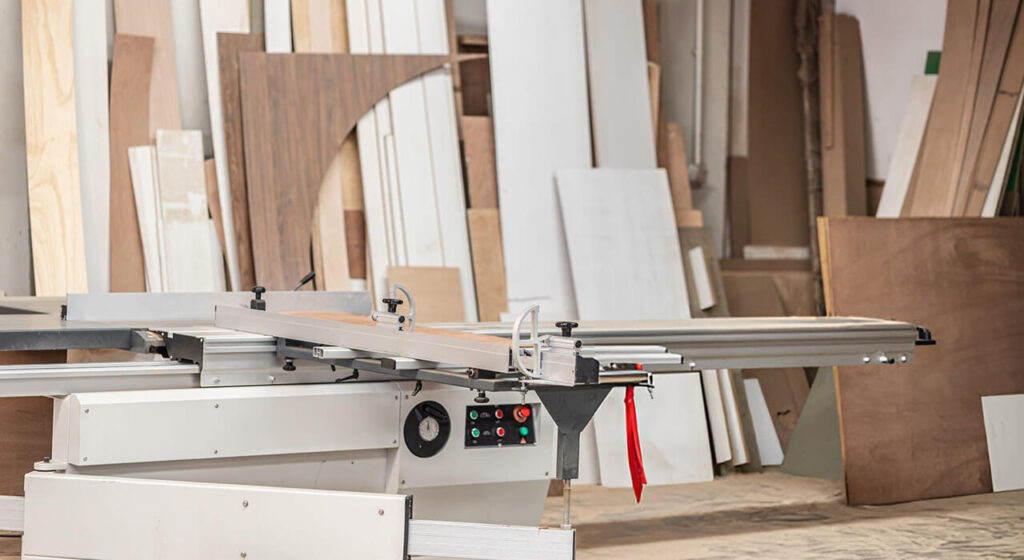
A sliding table saw can significantly improve cutting accuracy, productivity, safety, and material yield.
- Better Cutting Accuracy: A sliding table saw moves the material past the blade instead of forcing the operator to push heavy panels. You can get straighter cuts and cleaner edges.
- Higher Productivity: A sliding table saw can process sheet materials much faster than a conventional cabinet saw.
- Improved Material Yield: A precise sliding table saw helps reduce cutting mistakes, panel damage and chipping.
- Better Safety: sliding table saws provide better workpiece support, reduced kickback risk.
3. Top 10 Best Sliding Table Saw Brands Compared
3.1. BestIn MJ6132CNC
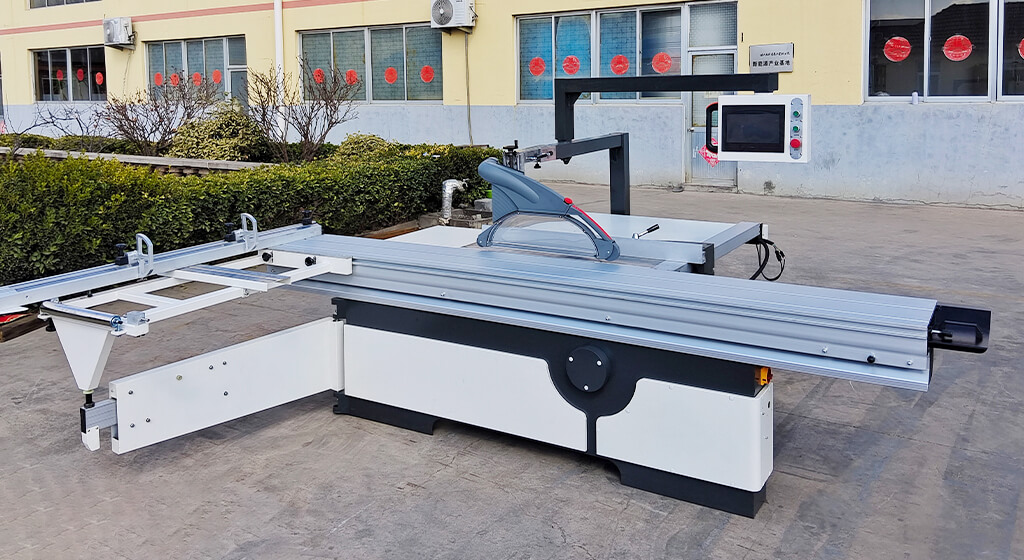
The BESTIN CNC MJ6132 Sliding Table Saw is a high-performance sliding table saw.
It was equipped with CNC-controlled rip fence system and a motorized sliding table. It can deliver highly accurate and repeatable cutting results while significantly reducing operator workload.
The robust machine structure, precision saw spindle system, and European-style sliding table ensure smooth operation and superior cutting quality across a wide range of materials.
Specification
|
Model |
CNCMJ6132 |
|
Scoring
Blade Diameter |
120 mm |
|
Sliding
Table Size |
3200 ×
410 mm |
Main
Spindle Diameter |
30 mm |
|
|
Maximum
Cutting Length |
3200
mm |
Scoring
Spindle Diameter |
20 mm |
|
|
Maximum
Cutting Width |
1250
mm |
Main
Blade Speed |
4500 /
6000 rpm |
|
|
Maximum
Cutting Thickness |
80 mm |
Scoring
Blade Speed |
7000–8000
rpm |
|
|
Main
Motor Power |
5.5 kW |
Blade
Tilt Angle |
0°–45° |
|
|
Scoring
Motor Power |
1.1 kW |
Machine
Weight |
1100
kg |
|
|
Total
Power |
6.6 kW |
Machine
Dimensions |
3350 ×
3350 × 900 mm |
|
|
Main
Saw Blade Diameter |
300 mm
(250–400 mm optional) |
|
|
3.2. Altendorf Sliding Table Saw WA8TE
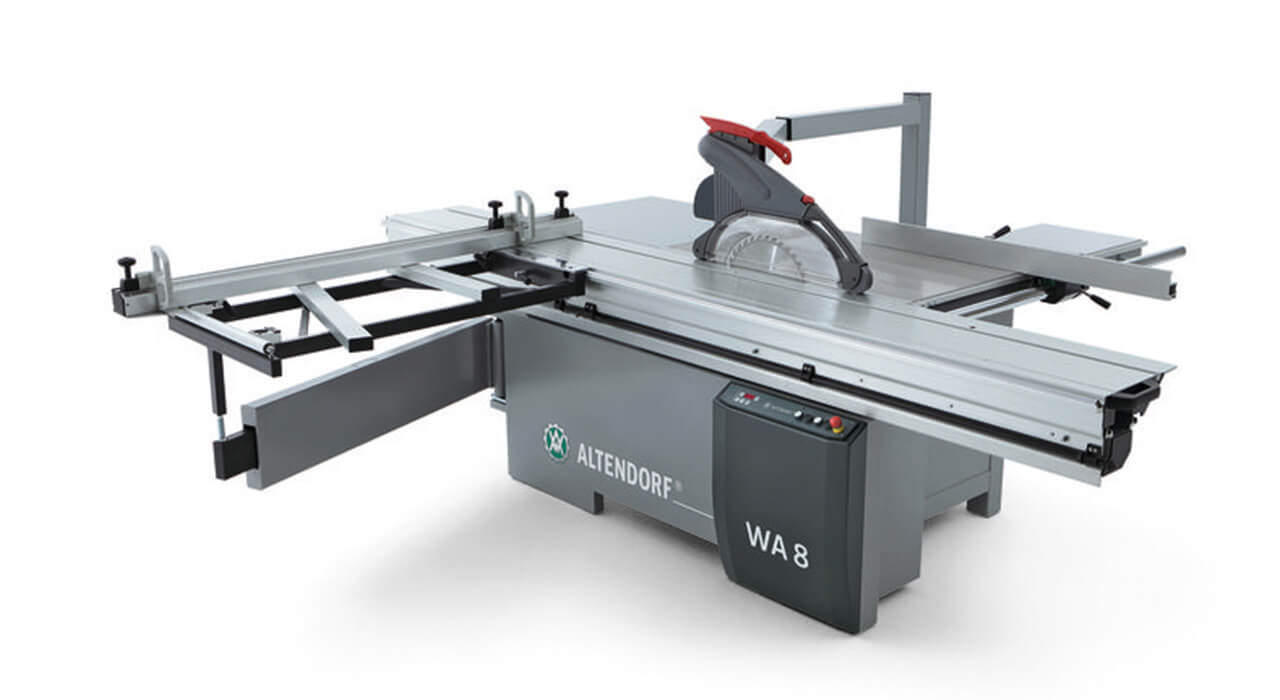
Engineered for heavy industrial use, Altendorf WA8TE features a 3200 mm sliding table for a generous 10-foot cutting capacity and accommodates blades up to 400 mm, delivering a cutting depth of up to 4.9 inches.
Its direct vertical guidance system ensures chip-free cuts—even with tilting—across challenging materials.
Key Features:
- Large Sliding Table: Provides extensive 3200 mm travel for oversized panels.
- Blade Capacity: Supports up to 400 mm diameter blades, enabling deep cuts (up to 4.9″).
- Direct Vertical Guidance: Guarantees chip-free, clean cuts on melamine, vinyl, HPL, and veneered panels.
- Electric Adjustments: Automated rise, fall, and tilting adjustments of the saw carriage for precision setup.
- Integrated Scoring Unit: Features automatic adjustments even when the scoring saw is in operation.
Specification
|
Sliding Table Dimension |
3200 x 404mm |
|
Scoring Saw Blade Bore |
20 mm |
|
Max. Rip Capacity |
1300mm (1000mm optional) |
Scoring Blade Motor |
1 HP |
|
|
Max. Crosscut Capacity |
3200mm |
Scoring Blade Speed |
8200 RPM |
|
|
Main Saw Blade Diameter (Max.) |
400 mm |
Blade Tilting Capacity (Motorized) |
0-45o |
|
|
Main Saw Bore |
30 mm |
Dust Outlets (2) |
120 / 80 mm |
|
|
Max. Cutting Height (400mm Blade) |
125mm |
Electrics |
230/3/60 or 575/3/60 |
|
|
Main Saw Motor |
7.5 HP |
Net Machine Weight |
1100 kgs |
|
|
Main Blade Speed |
3000 / 4000 / 5000 RPM |
Table Height From Floor |
910mm |
|
|
Scoring Saw Blade |
120 mm |
Scoring Saw Blade Bore |
20 mm |
3.3. SCM SI300 Nova Panel Saw
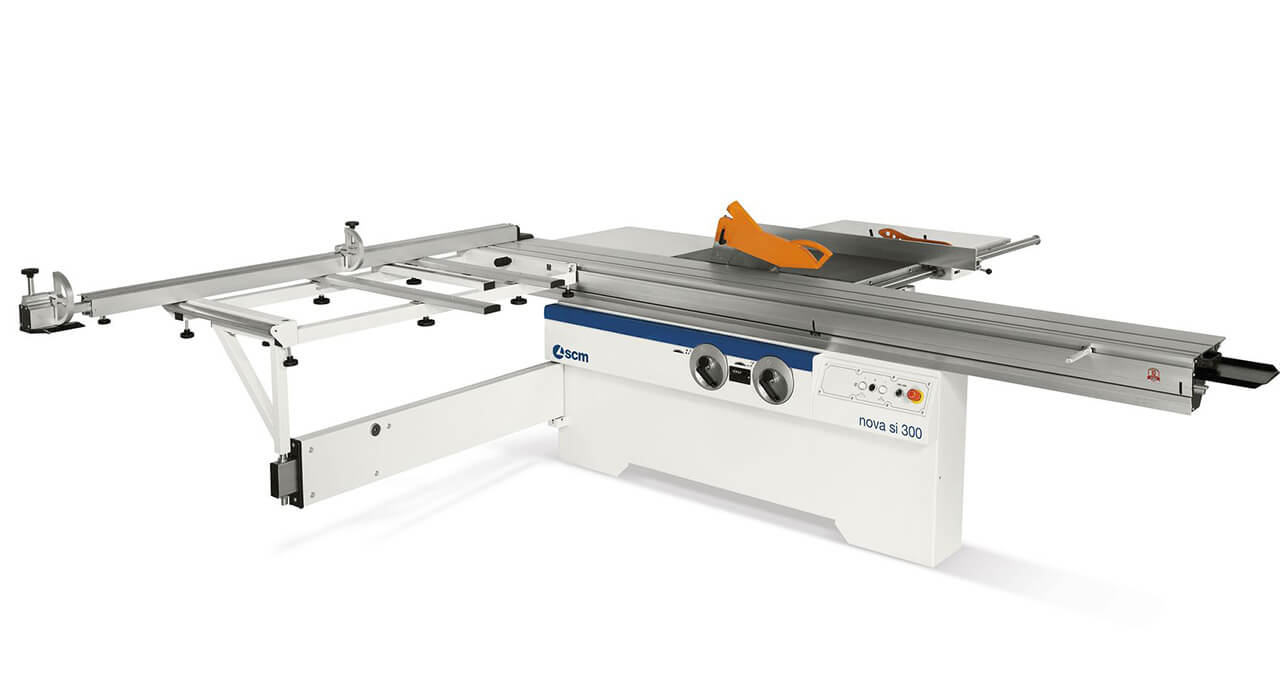
SCM SI300 Nova stands out as an excellent industrial panel saw that marries advanced manufacturing techniques with high precision. Its anodized sliding carriage on hardened steel guides ensures durability and flawless performance.
Key Features:
- Anodized Sliding Carriage: Ensures smooth motion on hardened steel guides.
- 10-Year Warranty: Confidence-inspiring warranty on the sliding mechanism.
- Operator-Centric Design: Manual lifting and tilting are positioned on the operator’s side, with mechanical readout for accurate adjustments.
- Independent Scoring Unit: External settings for precise scoring.
- Global Support: Manufactured to certified quality standards with efficient worldwide after-sales service.
Specification
|
Nova Si 300 |
|
|
|
Max. Saw Blade Diameter With Mounted
Scorer |
mm |
315 |
|
Maximum Saw Blade Projection From Table
To 90°/45° |
mm |
100/70 |
|
Cutting Width On Rip Fence |
mm |
1000 ÷ 1500 |
|
Squaring Capacity |
mm |
3200 ÷ 3800 x 3200 |
|
Three-Phase Motors Starting From |
kW/Hz |
5 (6) / 50 (60) |
3.4. Cantek D405ANC 1-Axis Sliding Table Saw
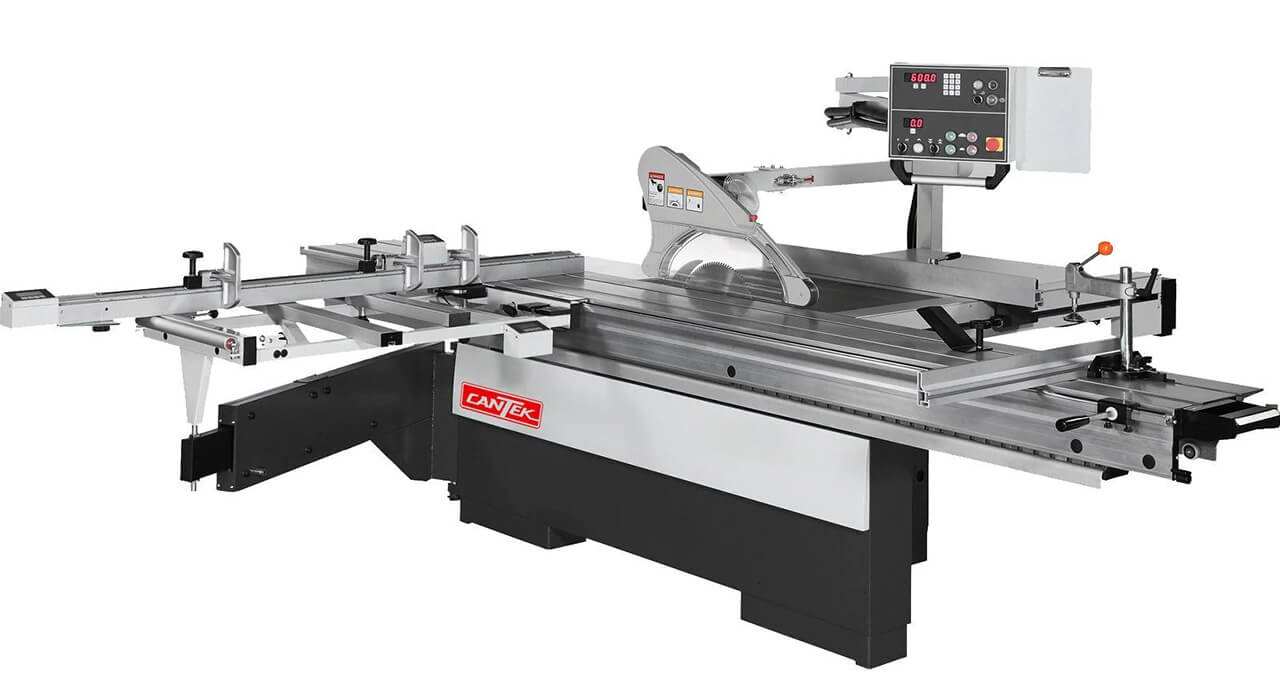
Cantek D405ANC is celebrated for its high-precision performance, especially for cutting sheet materials used in kitchen cabinetry, furniture, and millwork. Its powerful 7.5 HP main motor paired with a 1 HP scoring motor makes demanding operations a breeze.
Key Features:
- Powerful Dual Motors: 7.5 HP main motor with a separate 1 HP scoring motor for enhanced performance.
- Ergonomic Control Panel: Simplifies setting rip width, blade height, and blade angle.
- Accurate Crosscut Miter Fence: Enables fast length and angle adjustments for precision cuts.
- Robust Build: Designed to handle demanding industrial applications with consistent performance.
Specification
|
Sliding Table Dimensions |
3200 x 395mm |
|
Scoring Blade Bore Dia. |
20mm |
|
Cast Iron Table Dimensions |
548 x 896mm |
|
Scoring Blade Motor Power |
1 HP |
|
Extension Table (Rear) |
952 x 896mm |
|
Scoring Blade Speed |
8000 RPM |
|
Extension Table (Front) |
830 x 320mm |
|
Max. Rip Cutting Width |
1300mm |
|
Table Size |
1500 x 1726mm |
|
Cutting Width Adjustment |
Motorized |
|
Main Saw Blade (Max.) |
400mm |
|
Saw Blade Tilting Adjustment |
0~45o |
|
Main Saw Bore Dia. |
30mm |
|
Scoring Saw Adjustment |
Manual |
|
Max. Cutting Height @ 90o (400mm) |
130mm |
|
Dust Collection Outlets |
120 /100mm |
|
Main Motor Power |
7.5 HP |
|
Machine Shipping Dimensions |
2110 x |
|
Main Blade Speed |
3000 /4000 / 5000 RPM |
|
Machine NW / GW |
558 / 649 kgs |
|
Scoring Blade Dia. |
120mm |
|
|
|
3.5. Martin T60C Sliding Table Panel Saw
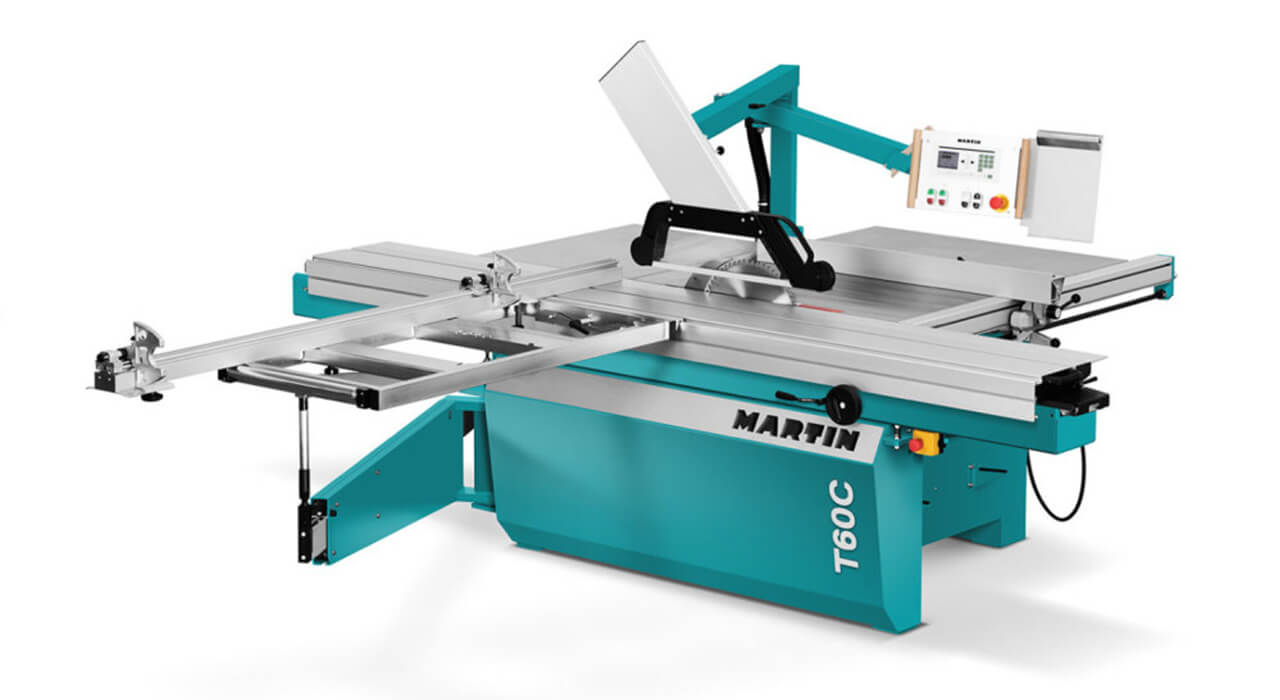
Martin T60C was manufactured in Germany to the highest premium standards. It’s perfect for cutting wood, plastics, and composites up to 130 mm high with incredible precision.
Key Features:
- Innovative Control System: A 3.5″ eye-level controller that guides the operator through each process.
- Powerful Motor: Equipped with a 5.5 kW (7.5 HP) S1 motor with electronic soft start braking.
- Triple Speed Options: Offers multiple speeds to suit various materials and cutting tasks.
- Large Rip Capacity: Provides a 1350 mm rip capacity along with hand-wheel fence adjustments and digital readouts.
Specification
|
Item |
Specification |
|
Sliding
Table Length |
3.0 m
(Optional: 1.9 m / 3.3 m / 3.7 m / 4.3 m) |
|
Cutting
Length |
3300
mm |
|
Sliding
Table Width |
400 mm |
|
Parallel
/ Rip Fence Cut Width |
1350
mm |
|
Cross-Cut
Capacity |
2200
mm (Telescopes to 3360 mm) |
|
Motor
Power |
5.5 kW
(Optional: 7.5 kW) |
|
Voltage
/ Phase |
415V /
3 Phase |
|
Saw
Blade Diameter |
400 mm |
|
Saw
Blade RPM |
4000 /
4800 / 6000 rpm |
|
Saw
Blade Tilt Range |
0° –
46° |
|
Max
Blade Projection at 90° |
130 mm |
|
Max
Blade Projection at 45° |
86 mm |
|
Motorized
Scoring Unit |
Yes |
|
Scoring
Blade Diameter |
120 mm |
|
Scoring
Blade Speed |
11,500
rpm |
|
Dust
Outlet Size |
120 mm
/ 100 mm |
3.6. ITECH SEGA 315 Panel Saw
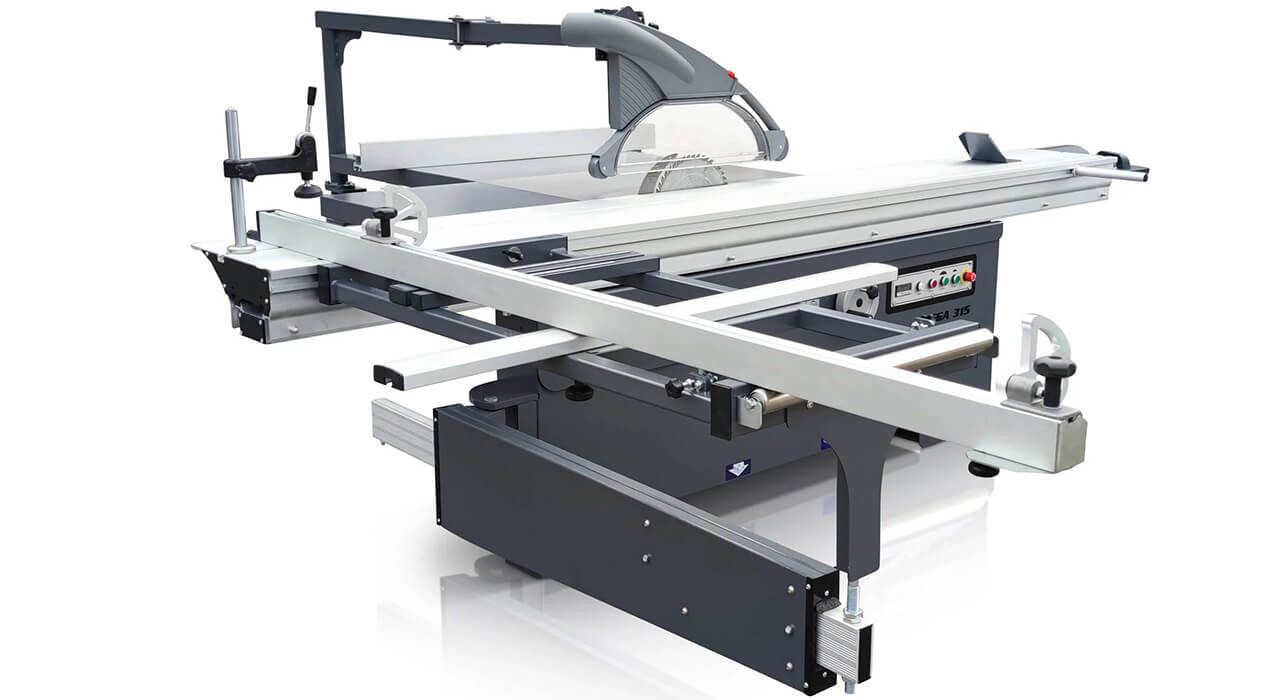
ITECH SEGA 315 is designed for large panels up to 10′ in length with a 3200 mm cutting capacity. It combines power, safety, and convenience with an adjustable overhead guard and extensive aluminum sliding table for maximum support.
Key Features:
- Large Cutting Capacity: Supports panels up to 3200×375 mm for wide-scale operations.
- Powerful S1 Rated Motors: 5.5 HP main motor with an independent, continuous-rated scoring motor.
- Adjustable Overhead Guard: Enhances safety with adjustable linear bearings and an extraction connection.
- Robust Support Frame: Provides exceptional panel stability and accurate mitering.
Specification
|
Item |
Specification |
|
Sliding
Table Length |
3.0 m
(Optional: 1.9 m / 3.3 m / 3.7 m / 4.3 m) |
|
Cutting
Length |
3300
mm |
|
Sliding
Table Width |
400 mm |
|
Parallel
/ Rip Fence Cut Width |
1350
mm |
|
Cross-Cut
Capacity |
2200
mm (Telescopes to 3360 mm) |
|
Motor
Power |
5.5 kW
(Optional: 7.5 kW) |
|
Voltage
/ Phase |
415V /
3 Phase |
|
Saw
Blade Diameter |
400 mm |
|
Saw
Blade RPM |
4000 /
4800 / 6000 rpm |
|
Saw
Blade Tilt Range |
0° –
46° |
|
Max
Blade Projection at 90° |
130 mm |
|
Max
Blade Projection at 45° |
86 mm |
|
Motorized
Scoring Unit |
Yes |
|
Scoring
Blade Diameter |
120 mm |
|
Scoring
Blade Speed |
11,500
rpm |
|
Dust
Outlet Size |
120 mm
/ 100 mm |
3.7. Fimal P3200SX Sliding Table Saw
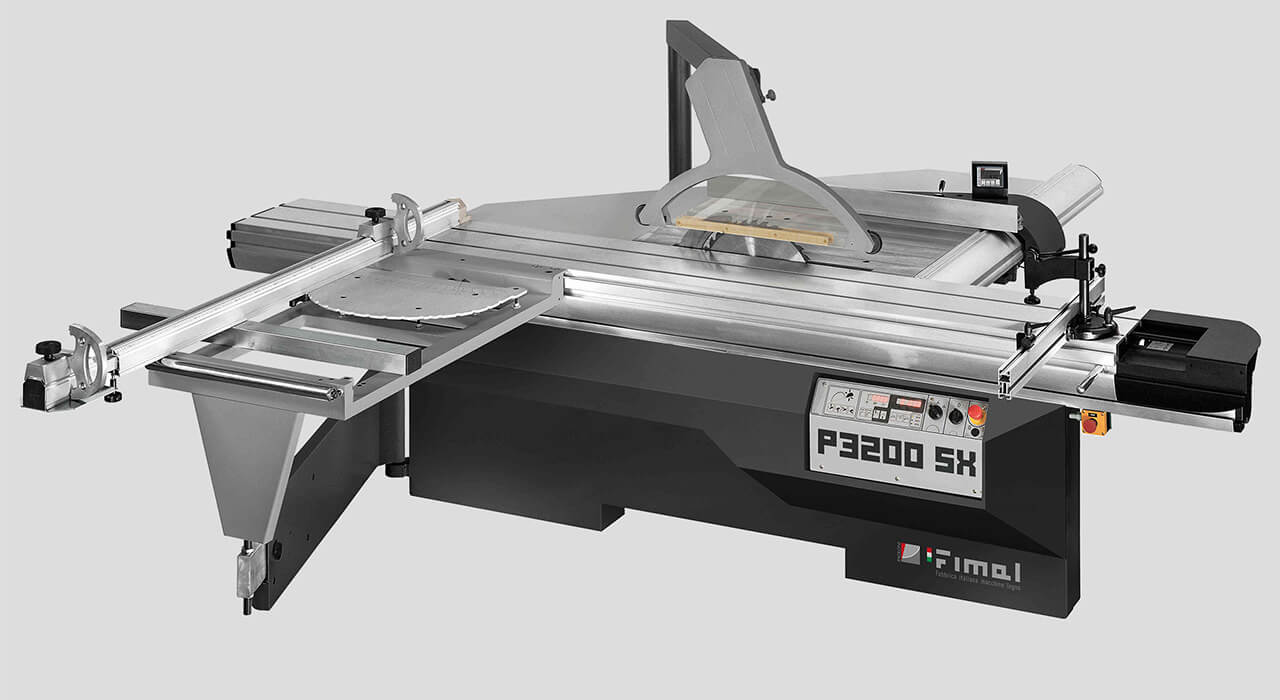
Fimal P3200SX is excellent with its superior carriage sliding system. Large-diameter bearings and precision-ground tracks ensure exceptional stability, virtually eliminating vibrations for a perfectly straight cut.
Key Features:
- Superior Sliding Carriage: Utilizes large-diameter bearings on prismatic, hardened tracks.
- Vibration-Free Operation: Mechanically engineered for exceptional stability and precision.
- Durable Construction: Designed to maintain glue adhesion and consistent performance over time.
- Precision Machining: Produced with numerically controlled machines for unparalleled accuracy.
3.8. PANHANS Sliding Panel Saw 680|200
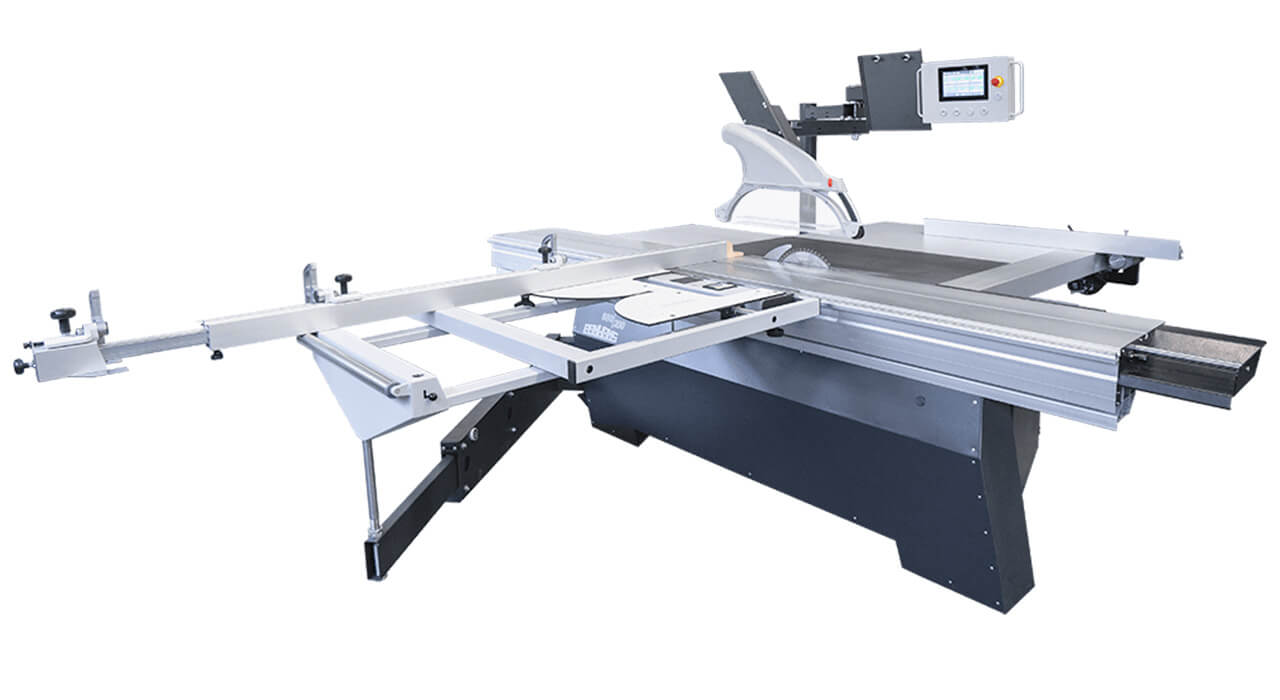
PANHANS 680|200 is a precision machine designed for professionals who require exceptional accuracy. With its maintenance-free aluminum sliding table and intuitive 4.7″ touch control, this saw excels in complex cutting tasks.
Key Features:
- Maintenance-Free Aluminum Table: Offers a 3200 mm cutting length with minimal upkeep.
- Intuitive Touch Control: A 4.7″ interface mounted on the machine base for effortless operation.
- Electromotive Adjustments: Height and angle adjustments are automated for precision settings.
- Wide Tilting Range: Supports a 0–46° tilt, making it versatile for various cutting requirements.
Specification
|
Item |
Specification |
|
Sliding Table Length |
3200 mm |
|
Cutting Length |
3400 mm |
|
Maximum Cutting Height |
155 mm at 90° / 105 mm at 46° |
|
Rip Fence Capacity |
1250 mm |
|
Cross-Cut Fence Capacity |
3500 mm (Extendable on Cross-Cut
Carriage) |
|
Maximum Saw Blade Diameter |
Ø 450 mm |
|
Cast Iron Table Top Size |
1200 × 655 mm |
|
Table Extension Size |
750 × 655 mm |
|
Table Widening Size |
1430 × 940 mm |
|
Table Height |
900 mm |
|
Saw Blade Tilt Range |
0° – 46° |
|
Main Saw Blade Speed |
3000 / 4000 / 5000 / 6000 rpm |
|
Saw Blade Retractable Under Table |
Ø 400 mm |
|
Angle / Mitre Fence Range |
0° – 46° |
|
Dust Extraction Ports |
Ø 120 mm / Ø 80 mm |
|
Net Weight |
Approx. 1150 kg |
3.9. Maksiwa Sliding Panel Saw BMT.3200.IR
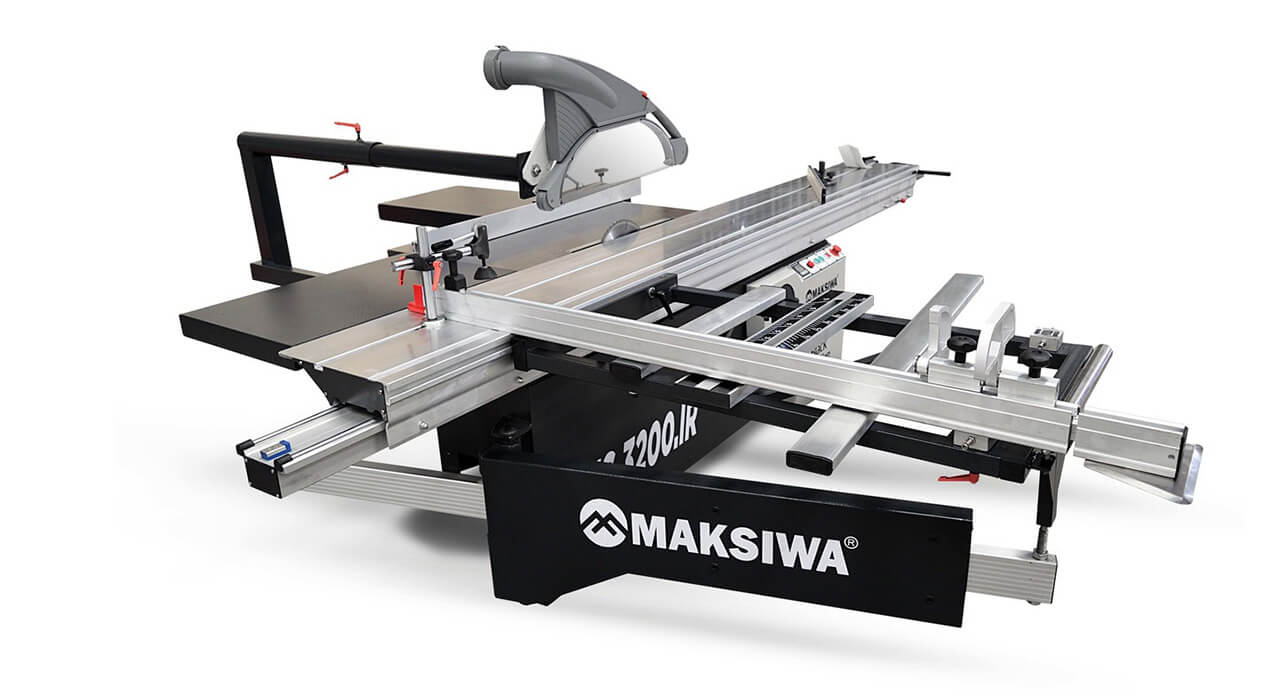
Maksiwa BMT.3200.IR is a custom-built machine for high-volume production, engineered for precision cutting at various angles. Its powerful 5 HP motor, cutting guides, and advanced safety features deliver unmatched performance.
Key Features:
- Powerful Motor: Equipped with a 5 HP motor that supports a maximum cut depth of 100 mm (4 inches) at 90°.
- Versatile Cutting Angles: Custom-built to deliver precise cuts at multiple angles with exceptional accuracy.
- Low Noise Operation: Operates at 76.5 dB when idle and up to 110 dB during cutting—minimizing disruption.
3.10. Format 4
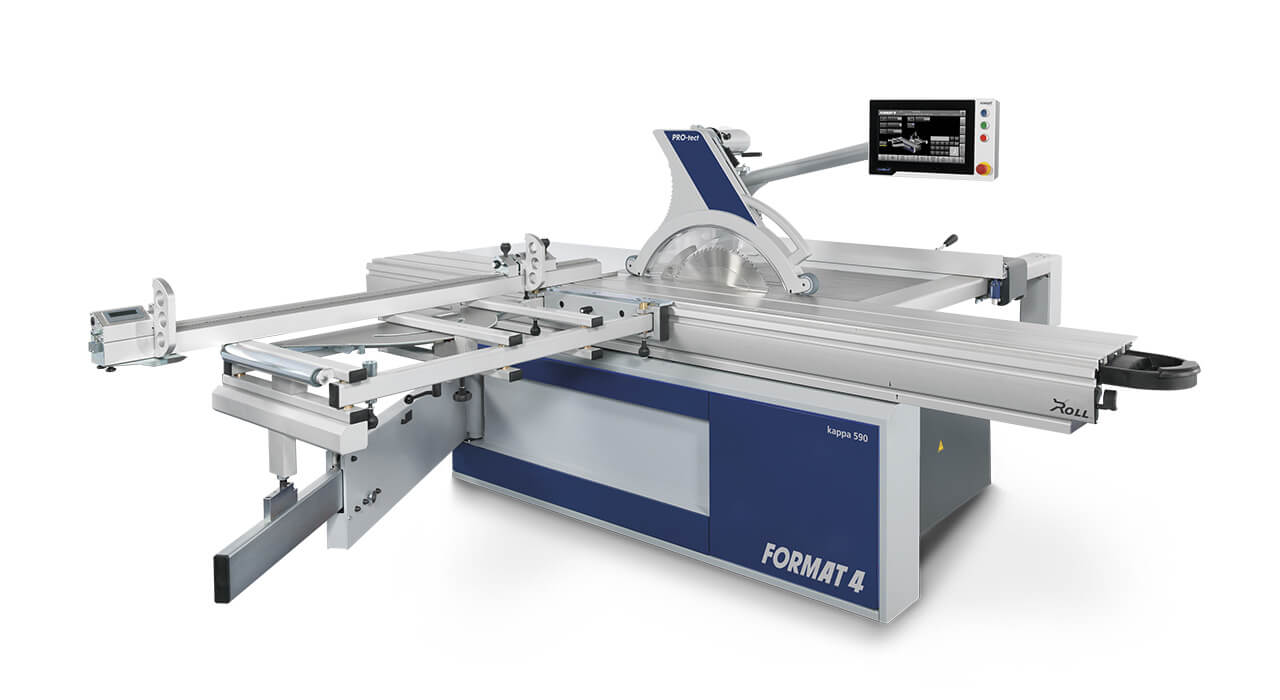
Kappa 590 Premium offers a total swivel range of 92° and an impressive cutting height of 202 mm for 550 mm diameter saw blades. Built for high-volume production, it makes internal miter and simple compound cuts effortless.
Key Features:
- Twin-Pivot Unit: Full swivel range of 92° enables diverse cutting angles.
- High Cutting Height: Accommodates saw blades up to 202 mm high.
- Synchronous Motor: Provides continuously adjustable speeds from 2,000 to 5,000 rpm.
- Poly-V-Belt Technology: Guarantees constant high performance and exceptional power transmission.
- Ergonomic Controls: A central operating unit with a 15″ touch screen, featuring a graphical user interface, multiple programs, USB interface, and network connectivity.
4. What Is The Difference Between A Sliding Table Saw From Other Table Saws?
Both
sliding table saws and cabinet saws are widely used in woodworking, but they
serve very different production needs.
|
Feature |
Sliding
Table Saw |
Cabinet
Saw |
|
Cutting
Method |
Workpiece
Moves On Sliding Carriage |
Operator
Pushes Material Into Blade |
|
Primary
Use |
Sheet Goods
(Plywood, MDF, Panels) |
Solid Wood
& General Cutting |
|
Material
Support |
Full-Length
Sliding Table |
Fixed Cast
Iron Table |
|
Workflow
Type |
Industrial
Panel Processing |
General
Woodworking |
|
Straight-Line
Accuracy |
Very
High |
High |
|
Repeatability |
Very
High |
Medium |
|
Chip-Free
Laminated Cutting |
Excellent
(With Scoring Blade) |
Limited |
|
Kickback
Risk |
Low |
Higher |
|
Operator
Exposure To Blade |
Low |
Medium |
|
Large Panel
Handling Safety |
High |
Lower |
|
Scoring
Blade |
Common |
Rare |
|
CNC Fence
System |
Optional/Advanced |
Rare |
5. What Are The Main Parts Of The Sliding Table Saw?
5.1. Miter Gauge
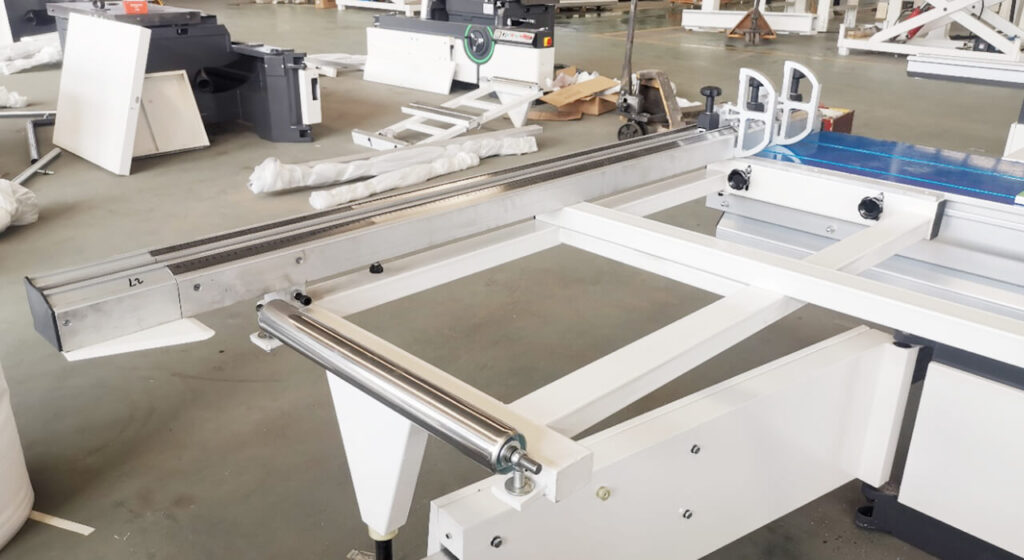
The miter gauge is an important component. It is a guide that allows the user to adjust the angle of the cut to create precise and intricate shapes.
A well-designed miter gauge can offer a range of angles and is easily adjustable, making it an essential tool for any woodworker.
5.2. Rip Fence
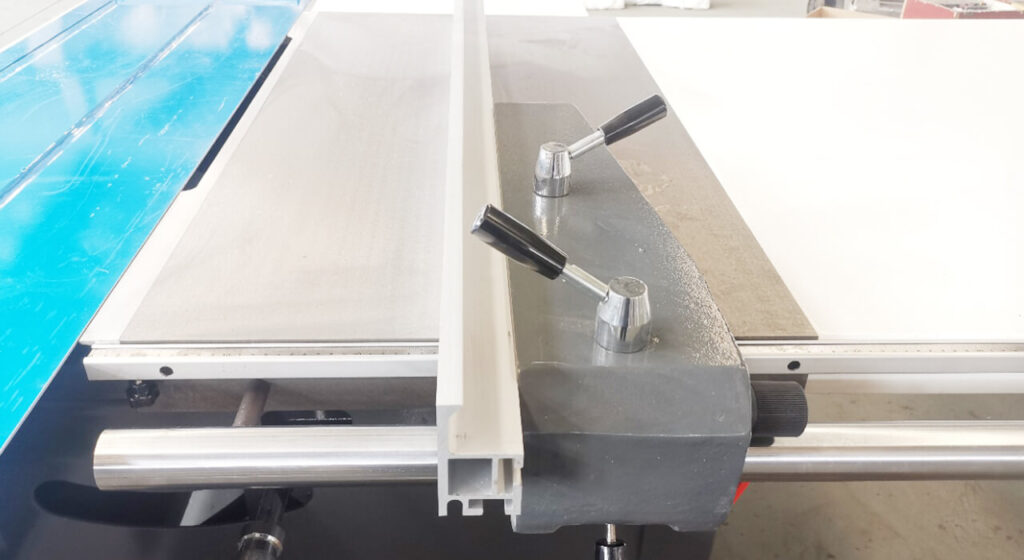
The rip fence ensure saccuracy and consistency in straight cuts. It is a guide that runs parallel to the saw blade and helps to keep the material being cut in a straight line during cutting.
A good quality rip fence is adjustable, locks securely in place, and can be easily removed when needed.
5.3. Bevel System
The
bevel system of a sliding table saw allows the user to tilt the blade to make
angled cuts, creating beveled edges and other intricate shapes.
It is a
crucial component of the saw that enables the user to create a variety of cuts
with precision and accuracy.
The
bevel system can also include features such as angle indicators and positive
stops, making it easier for the user to achieve the desired angle.
5.4. Blade Group
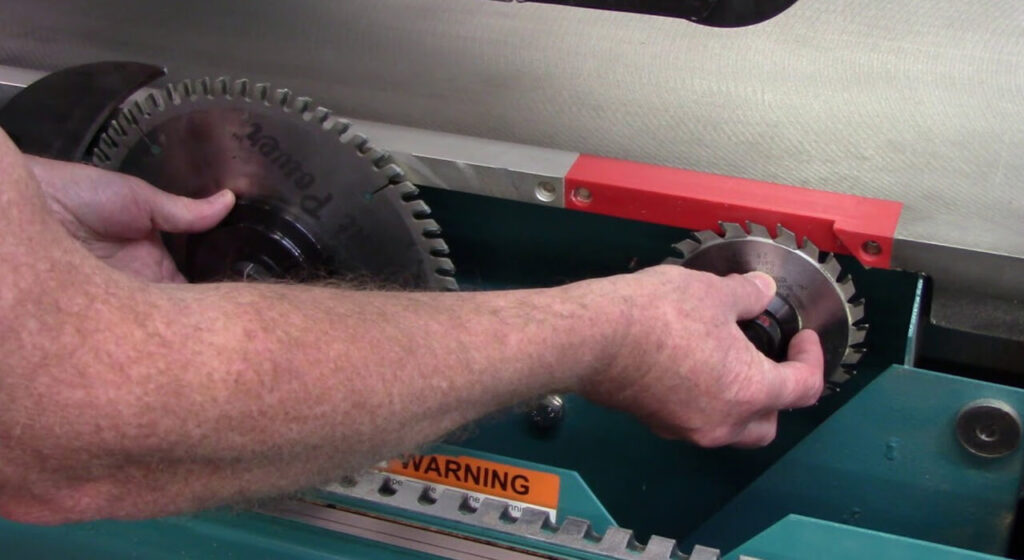
The blade group consists of the main saw and the scoring saw.
The main saw is responsible for making the main cut, while the scoring saw helps to prevent tear-out and improve the quality of the cut.
This component is essential for achieving clean and precise cuts, especially when working with fragile or delicate materials.
5.5. Blade Guard
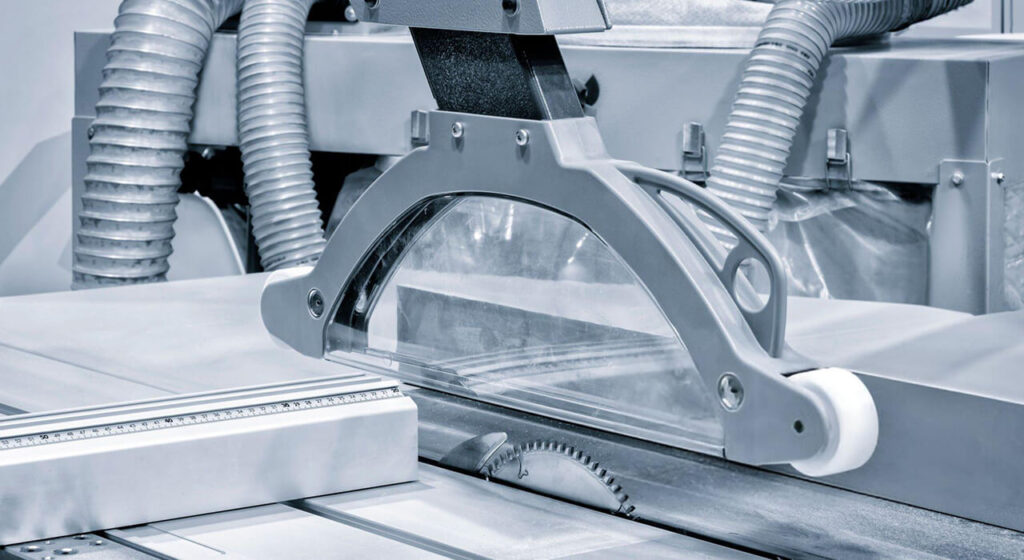
The
blade guard is an essential safety feature of a sliding table saw that helps to
prevent injury by covering the blade during cutting.
It is a
device that surrounds the blade and prevents the user from coming into contact
with it during use.
Additionally,
it helps to prevent sawdust and debris from flying up and causing injury,
making it an essential component for safe operation.
6. How to Choose the Best Sliding Table Saw for Your Workshop
When you buy a sliding table saw, you need to understand your specific needs and evaluate how each machine’s features align with your production goals.
Here are key factors to consider:
6.1. Assess Your Production Needs
- Volume: Determine the number of panels or pieces you need to cut daily. High-volume production requires faster, more automated machines.
- Material Types: Consider the types of materials you will be cutting—hardwoods, plywood, MDF, or composites—and ensure the saw is compatible with them.
- Precision Requirements: For fine cabinetry and intricate joinery, a saw with advanced digital controls and precision fences is essential.
6.2 Budget and Investment
- Cost vs. Value: While premium models offer advanced features, many mid-range machines provide excellent performance at a lower cost.
- Long-Term Investment: Consider warranty, after-sales service, and maintenance support. A higher initial investment might save you costs in the long run by reducing downtime.
6.3 Space and Layout
- Workshop Size: Ensure that the sliding table saw will fit into your workshop without disrupting your workflow.
- Integration: If you have automated material handling or CNC systems, look for machines that integrate seamlessly with your existing setup.
6.4 Safety and Compliance
- Safety Features: Prioritize machines with advanced safety features like blade guards, emergency stop mechanisms, and flesh-detection technology.
- Regulatory Compliance: Ensure the machine meets industry standards and safety certifications (e.g., OSHA guidelines).
6.5 Ease of Use and Maintenance
- User Interface: Opt for machines with intuitive controls and digital interfaces that simplify operation.
- Maintenance: Look for models that offer easy access for cleaning, blade changes, and routine servicing.
7. Maintenance and Safety Tips for Your Sliding Table Saw
Maintaining your sliding table saw is key to ensuring consistent performance and longevity. Here are some expert tips:
7.1. Regular Cleaning and Inspection
- Dust Extraction: Clean dust and debris regularly using the built-in dust extraction system.
- Visual Inspection: Check for wear and tear on the sliding rails, fence, and blade guard.
7.2. Preventive Maintenance
- Lubrication: Regularly lubricate moving parts to ensure smooth operation.
- Blade Maintenance: Keep the blade sharp and properly aligned for clean cuts.
- Calibration: Periodically recalibrate digital controls and fences to maintain accuracy.
7.3. Safety Practices
- Operator Training: Ensure all operators are fully trained on safe operation and emergency protocols.
- Use of PPE: Always wear safety glasses, hearing protection, and dust masks.
- Emergency Procedures: Familiarize yourself with the machine’s emergency stop functions and maintain clear access to safety controls.
- For more detailed maintenance tips, see our Maintenance Guide.
8. To Sum Up
Choosing the right sliding table saw is not just about making a purchase—it’s an investment in the future success of your woodworking operations.
With enhanced precision, improved safety, and increased production capabilities, the best sliding table saw can redefine your workflow and help you achieve professional-grade results.
Don’t wait—upgrade your workshop today.
Get a Free Quote or Contact Us Now to speak with one of our experts and discover exclusive offers available for a limited time!