An edgebander return conveyor is worth the investment when panel handling limits production.
It can also make sense when it reduces paid labor hours. The strongest case combines regular use, compatible panels, and measurable handling costs.
However, a return conveyor doesn’t automatically increase finished output. It won’t correct poor glue application or frequent machine stoppages. Its value comes from improving the movement of panels around the edgebander.
For furniture factories, that distinction matters. A faster conveyor means little when drilling or assembly already limits production.
The buying decision should start with your current workflow. Equipment specifications come next.
Table of Contents
1. What Does an Edgebander Return Conveyor Do?
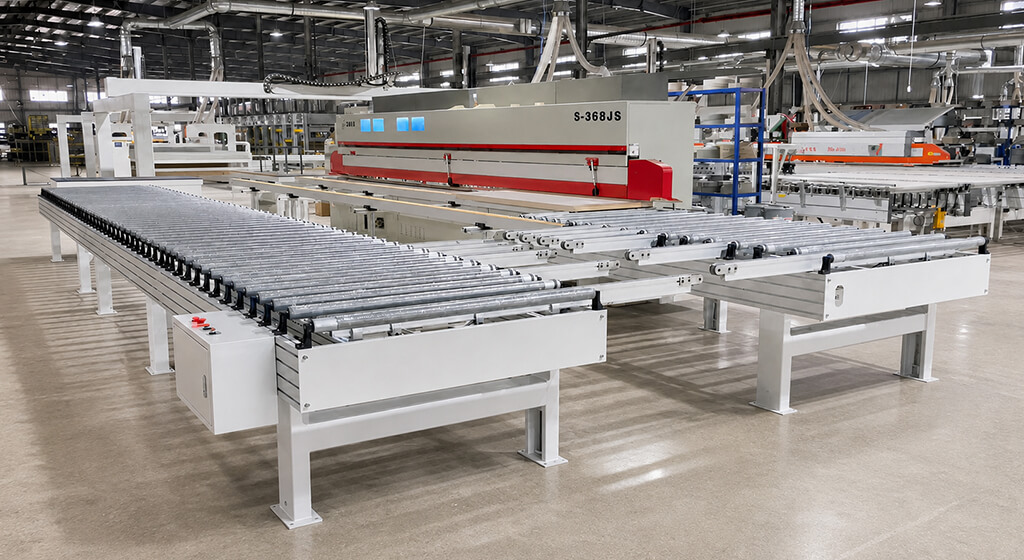
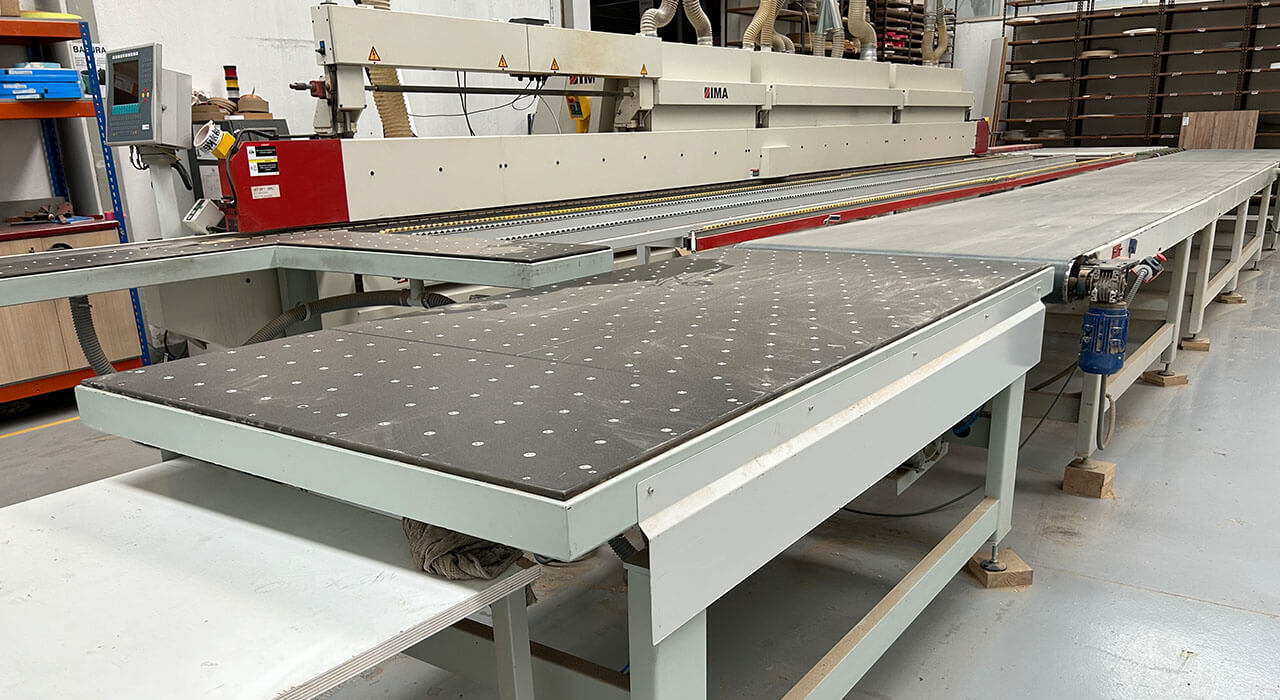
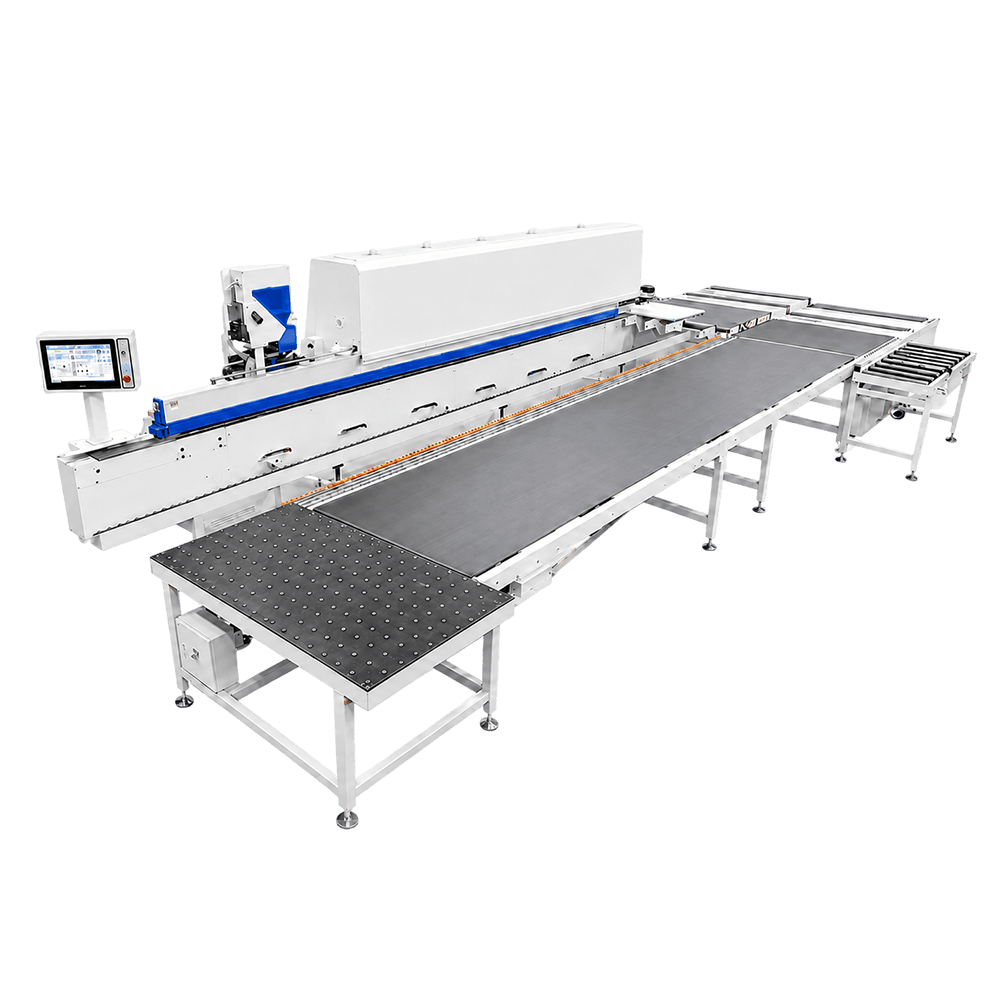
An edgebander return conveyor receives panels after they exit the machine. It transports them back toward the operator at the infeed.
This arrangement reduces walking and repeated manual transfers. It supports repeated passes through a single-sided edgebander.
Depending on the system, panels may also be turned or stacked. Those functions require specific equipment and controls.
We offer return systems matched by size, speed, and control interfaces. Its range supports single-operator processing within suitable production arrangements.
1.1. A Return Conveyor Isn’t a Complete Automation Cell
A basic return system mainly handles transport. The operator may still turn, inspect, sort, and refeed panels.
Automatic rotation and stacking are separate capabilities. They shouldn’t be assumed from the term “return conveyor.”
Felder’s return-system range illustrates these differences. Some configurations include adjustable turning points and panel rotation.
1.2. One Panel Can Require Several Passes
A single-sided edgebander generally processes one edge during each pass. A panel requiring four edged sides may therefore need four passes.
That creates several handling events for one finished panel. A return conveyor can reduce the work between those passes.
Production records should distinguish passes from completed panels. Otherwise, output comparisons can become misleading.
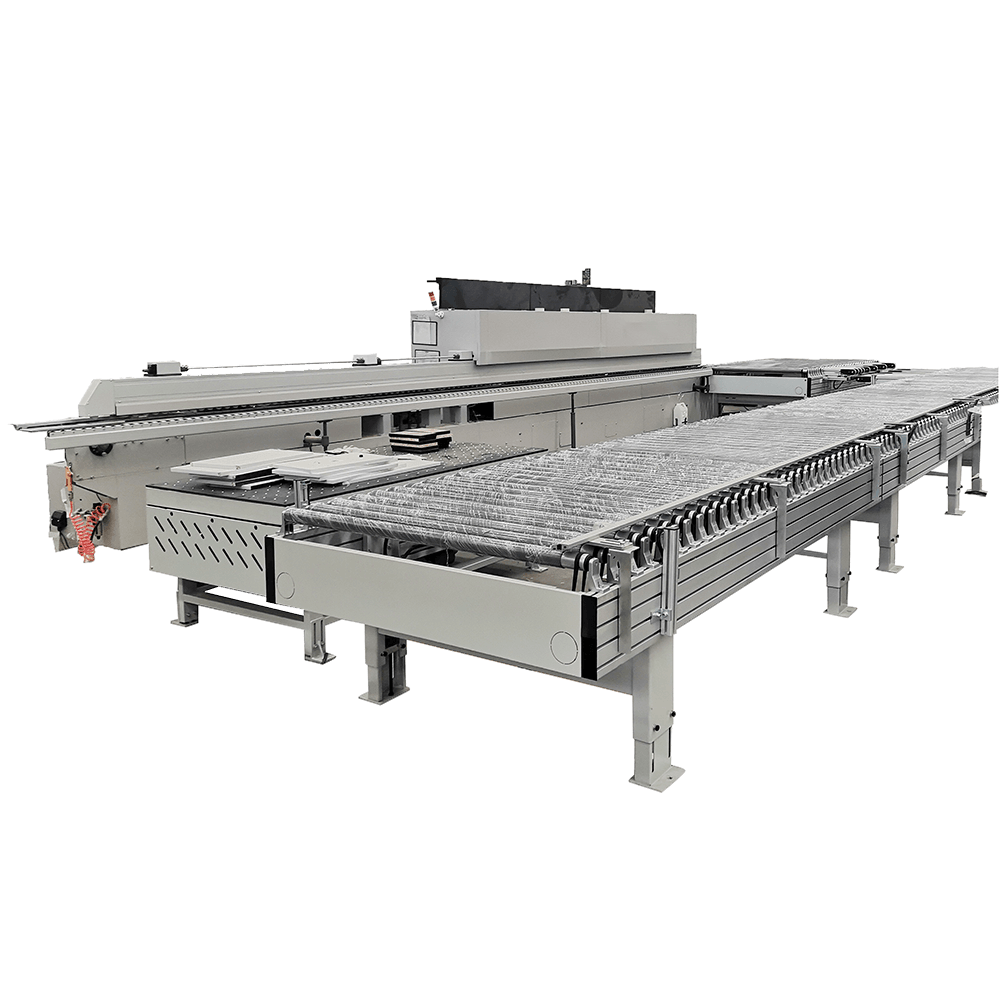
Heavy
Max
- Strong Workpiece Support
- Suitable for Heavy Panels
- Efficient Transportation
- Industrial Production Capability
2. When Is a Return Conveyor Worth Buying?
2.1. The Outfeed Position Requires Regular Staffing
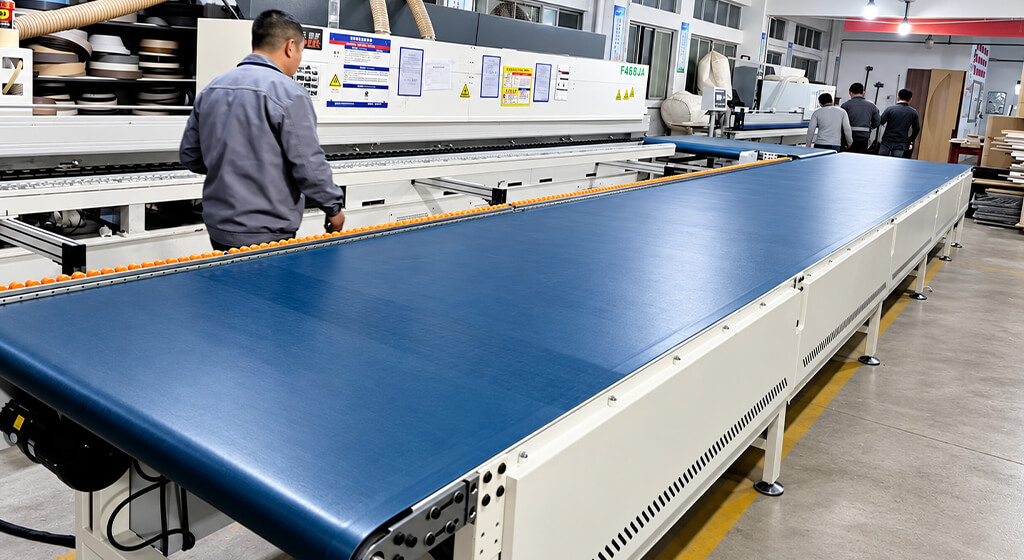
Some factories assign one operator to feeding and another to receiving panels. A suitable return system may reduce one staffing.
However, one-person operation must work across your actual panel mix. Large panels or demanding inspection tasks may still require assistance.
The financial benefit also depends on what happens afterward.
Reduced overtime can create cash savings. Avoiding an additional hire can also create measurable value.
Redeploying an employee can improve factory output. Their entire wage isn’t automatically a cash saving, though.
2.2. The Edgebander Waits for Panels
An edgebander can have plenty of processing capacity yet remain underused. The operator may spend too much time retrieving and repositioning panels.
A return conveyor can help when those handling gaps interrupt feeding.
The useful measurement is waiting time caused by panel handling. Total machine downtime alone won’t reveal that problem.
2.3. The Factory Processes Multiple Edges Regularly
Repeated passes increase the value of an organized return loop. Cabinet sides, shelves, and fronts can generate considerable handling work.
The opportunity depends on the edging schedule. A factory producing mostly single-edge parts has a different handling requirement.
2.4. Manual Transfers Create Quality Problems
Repeated carrying and stacking can expose panels to handling damage. A controlled return path may reduce those transfer points.
However, conveyor cleanliness and contact materials still matter. Debris on belts or rollers can damage sensitive surfaces.
3. When Might the Investment Be Difficult to Justify?
3.1. The Edgebander Runs Only Occasionally
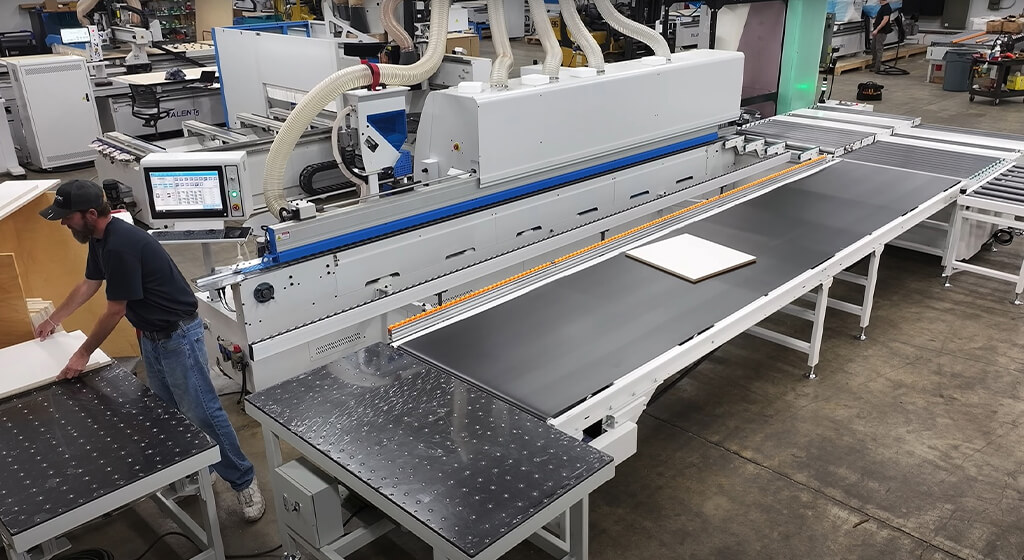
Low utilization stretches the payback period. A conveyor used briefly each day has fewer opportunities to generate savings.
A better outfeed table or revised layout may address the immediate problem. The comparison should include those lower-cost options.
3.2. Most Delays Come from Setups or Processing Problems
Frequent glue color changes can consume substantial production time. Glue problems, trimming faults, and rework can create further losses.
A return conveyor doesn’t remove those causes.
The factory should separate handling losses from processing losses. Otherwise, the proposal may credit automation with benefits it cannot deliver.
3.3. The Panel Mix Creates Frequent Exceptions
Oversized panels, narrow strips, and unusual shapes need closer evaluation. Their handling requirements may differ from standard cabinet components.
A system that returns most panels can still create awkward exceptions.
The real question is how often those exceptions occur. Their frequency determines how much manual support remains necessary.
3.4. Another Department Already Limits Output
More edging capacity doesn’t guarantee more shipped furniture. Cutting, Drilling, assembly, or packing may already determine the factory’s output.
Additional edging capacity still provides flexibility. It may help absorb peaks or reduce overtime.
However, additional sales shouldn’t enter the calculation without downstream capacity and demand.
4. How Do You Calculate Return Conveyor Payback?
Simple payback compares the installed investment with annual net benefits.
Simple payback, in years = Total installed cost ÷ Annual net benefit
The calculation is useful for an initial comparison. It doesn’t account for financing, taxes, or the time value of money.
4.1. The Installed Cost Includes More Than the Conveyor
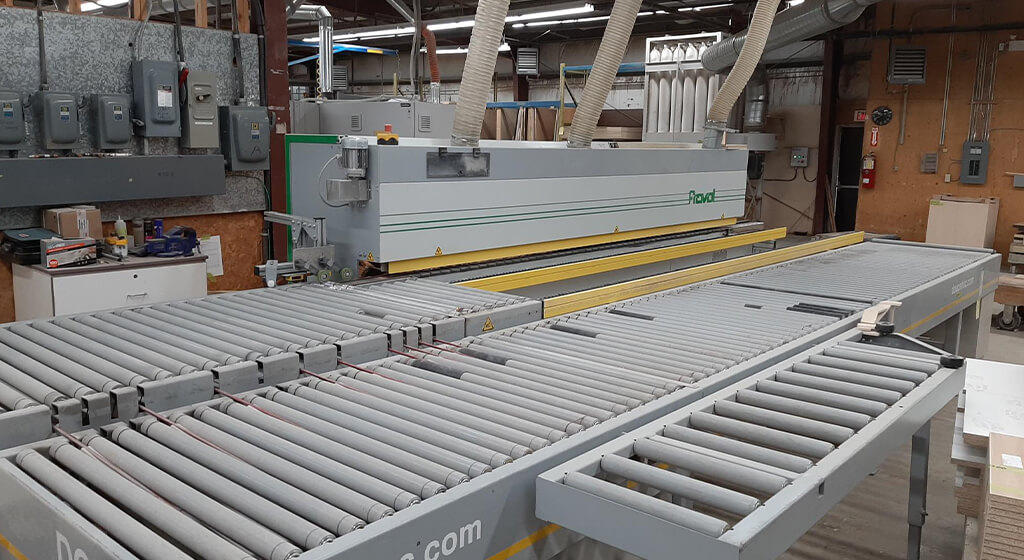
A complete investment estimate should include:
- The conveyor and selected options.
- Freight and installation.
- Electrical and compressed-air work, where required.
- Machine interfaces and control integration.
- Layout changes and commissioning.
- Operator training.
- Production losses during installation.
4.2. Annual Benefits Must Be Realistic
Annual net benefit equals realizable benefits minus additional operating costs.
Potential benefits include reduced paid hours and avoided overtime.
Verified reductions in handling damage may also contribute.
Additional output creates value only when it can be sold. The calculation should use contribution margin, rather than total sales revenue.
Additional costs can include maintenance, energy, and replacement parts. Expected downtime should also enter the assessment.
4.3. An Illustrative Payback Example
The following figures are assumptions, not supplier prices or industry benchmarks.
|
Calculation
item |
Illustrative
amount |
|
Total
installed investment |
$45,000 |
|
Annual
paid labor hours avoided |
1,200
hours |
|
Fully
burdened hourly labor cost |
$25 |
|
Annual
labor benefit |
$30,000 |
|
Verified
annual reduction in handling damage |
$1,500 |
|
Additional
annual operating costs |
$3,500 |
|
Annual
net benefit |
$28,000 |
|
Simple
payback |
Approximately
19.3 months |
The
annual labor benefit equals 1,200 hours multiplied by $25.
Annual
net benefit equals $30,000 plus $1,500, minus $3,500.
The
$45,000 investment therefore pays back in approximately 1.61 years.
That
result depends heavily on the labor assumption. If paid hours remain unchanged,
the same cash-saving calculation doesn’t apply.
4.4. A Conservative Case Shows the Risk
Suppose the factory avoids only 600 paid hours annually. The labor benefit falls to $15,000.
With other assumptions unchanged, annual net benefit becomes $13,000. Simple payback then increases to approximately 41.5 months.
This comparison reveals the main uncertainty: actual labor savings.
A proposal should remain acceptable under a reasonable conservative scenario.
5. Will a Return Conveyor Increase Edgebanding Output?
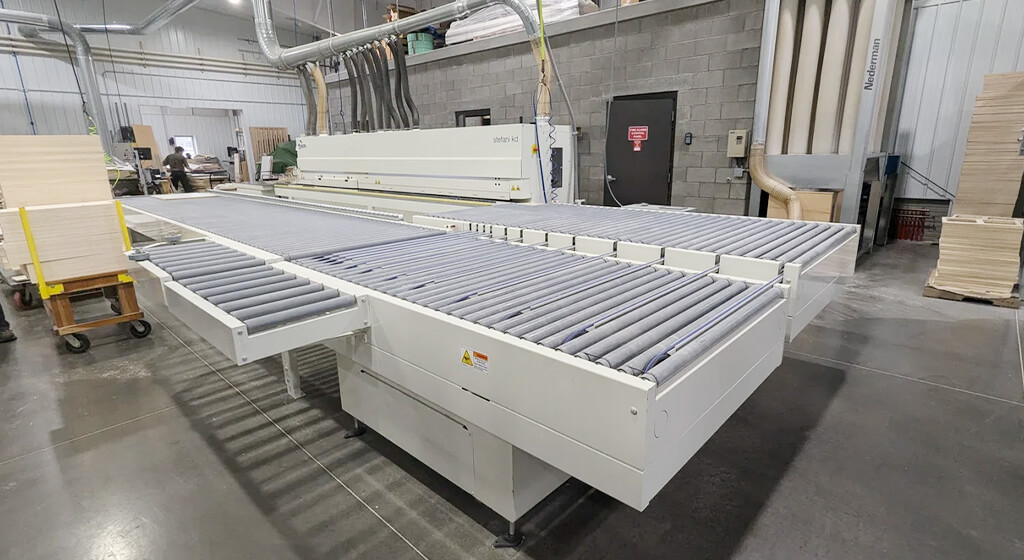
A return conveyor can increase output when handling interrupts machine feeding. It doesn’t increase the edgebander’s processing capability by itself.
The result depends on the complete return cycle. Panels must transfer, return, turn, and re-enter without creating another queue.
5.1. Feed Speed Doesn’t Equal Finished Output
Feed speed measures panel travel through the machine. It doesn’t measure completed panels per hour.
Panel length and spacing affect the number of passes. Edge count and operator workload affect completed output.
A four-edge panel requires more processing than a single-edge panel. Both may appear identical in a simple panel counter.
A useful comparison records finished panels per paid labor hour.
5.2. The Operator Must Manage the Whole Loop
One operator may feed panels and receive returning workpieces. They may also inspect edges and separate completed parts.
Those tasks can overlap during busy periods.
A demonstration should show the actual operator workload. A continuously running conveyor alone proves very little.
The relevant result is stable production with acceptable quality.
6. What Compatibility Checks Matter Before Purchasing?
6.1. Panel Limits Need Separate Checks
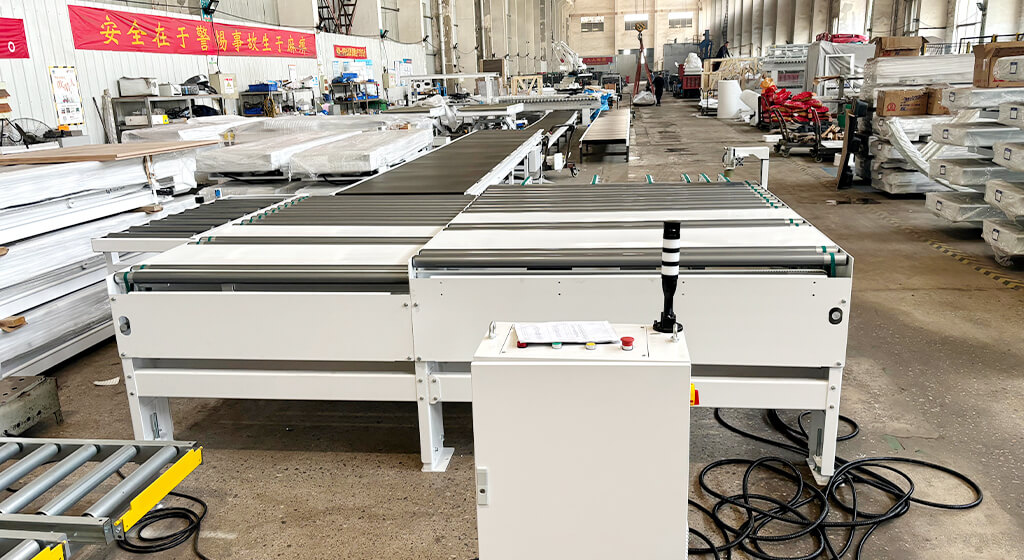
Suppliers specify limits for length, width, thickness, and weight. Turning limits may differ from basic return limits.
For example, HOMAG publishes separate limits for four-sided processing. Its LOOPTEQ O-300 distinguishes those limits from general workpiece dimensions.
A panel may fit the return path but require turning assistance.
We will assess your full production range.
6.2. Surface Quality Needs a Physical Trial
Gloss finishes and decorative surfaces deserve particular attention. Support points, belt contact, and transfers can affect their condition.
A realistic trial should include your most sensitive panels. Inspection should cover faces, corners, and newly applied edges.
The acceptance standard should match your existing quality requirements.
6.3. Retrofit Integration Needs Written Confirmation
An existing edgebander may require mechanical or control modifications.
The supplier should confirm transfer height, interfaces, and stopping behavior. Responsibilities for integration should appear clearly in the quotation.
The proposed arrangement also needs coordinated guarding and emergency stops.
6.4. The Layout Must Include Working Space
The return conveyor footprint doesn’t describe the entire space requirement.
Operators need access for inspection and exception handling. Maintenance staff need access to belts, sensors, and transfer mechanisms.
Trolleys, finished stacks, and pedestrian routes need space too.
A layout drawing should show the complete working arrangement.
7. FAQ
Can One Person Operate an Edgebander with a Return Conveyor?
Is a Return Conveyor Suitable for a Small Furniture Factory?
Can a Return Conveyor Be Added to an Existing Edgebander?
Does a Return Conveyor Improve Edge Quality?
8. The Investment Should Solve a Measured Production Problem
An edgebander return conveyor makes sense when panel handling costs the factory money. Regular use and suitable workpieces strengthen the case.
The purchase becomes harder to justify when the expected savings remain theoretical.
The strongest proposal starts with actual production records. It includes a complete installed price and a representative panel trial.
Before requesting quotations, your team needs three clear inputs: the panel range, handling losses, and annual utilization. Those inputs give suppliers a practical basis for sizing the system.
They also give your factory a reliable basis for deciding whether to invest.