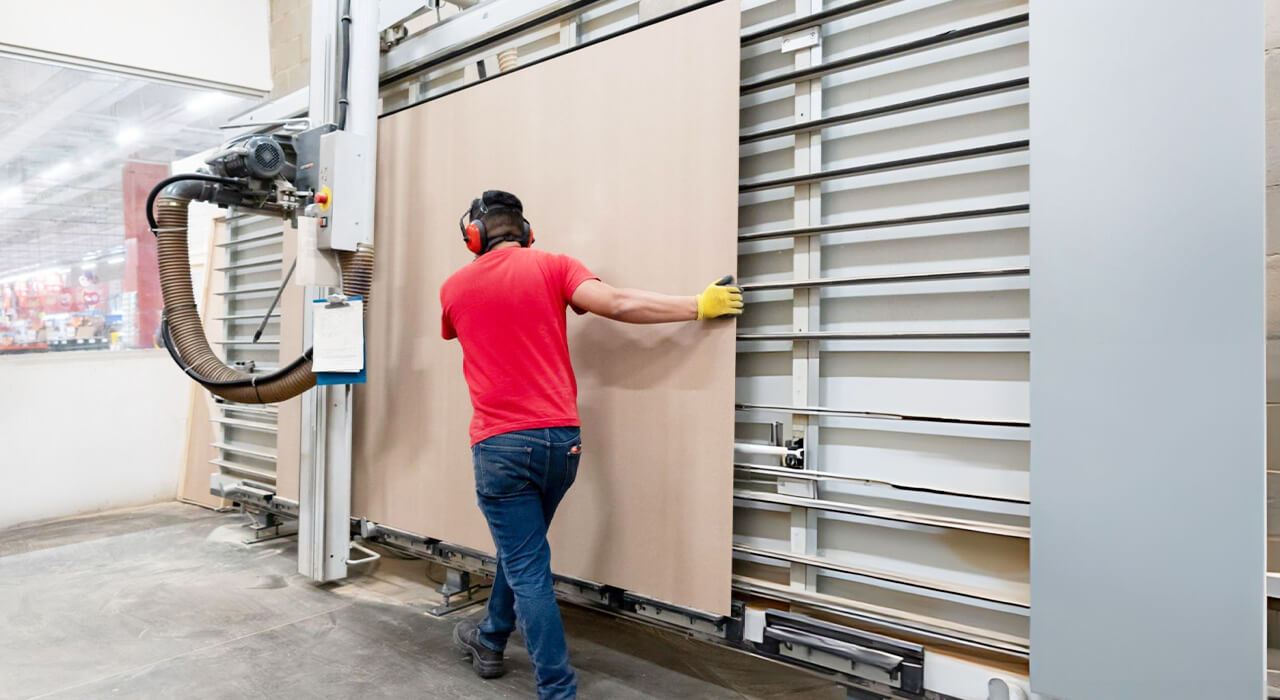
Vertical Panel Saw is one of the most space-efficient panel processing machines available today.
Many cabinet shops struggle with handling large plywood sheets. Plywood, MDF, particleboard, and melamine panels are often heavy and difficult to move safely. Traditional table saws require substantial floor space and skilled operators.
A vertical panel saw offers a practical solution. It reduces material handling, saves space, and improves cutting efficiency.
However, not all vertical panel saws are the same. Choosing the wrong machine can lead to bottlenecks, quality issues, and unnecessary costs.
This guide explains the key factors every furniture manufacturer should evaluate before purchasing a vertical panel saw.
Table of Contents
1. What Is a Vertical Panel Saw?
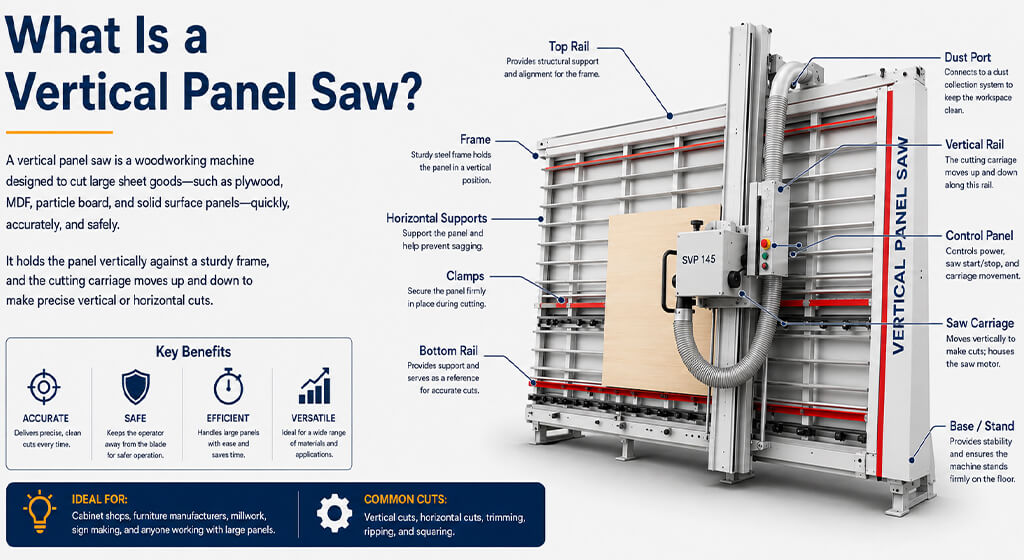
Vertical Panel Saw is a machine designed to cut large panel sheets.
The panel sheet stands upright against a support frame. The saw carriage moves vertically and horizontally. This design reduces floor space requirements and improves material handling.
This Design Provides Several Advantages:
- Reduced Floor Space Requirements
- Easier Sheet Handling
- Improved Operator Safety
- Faster Panel Breakdown
- Better Workflow For Cabinet Production
For many factories, it becomes the first step in the panel processing workflow.
2. Is a Vertical Panel Saw Worth Buying?
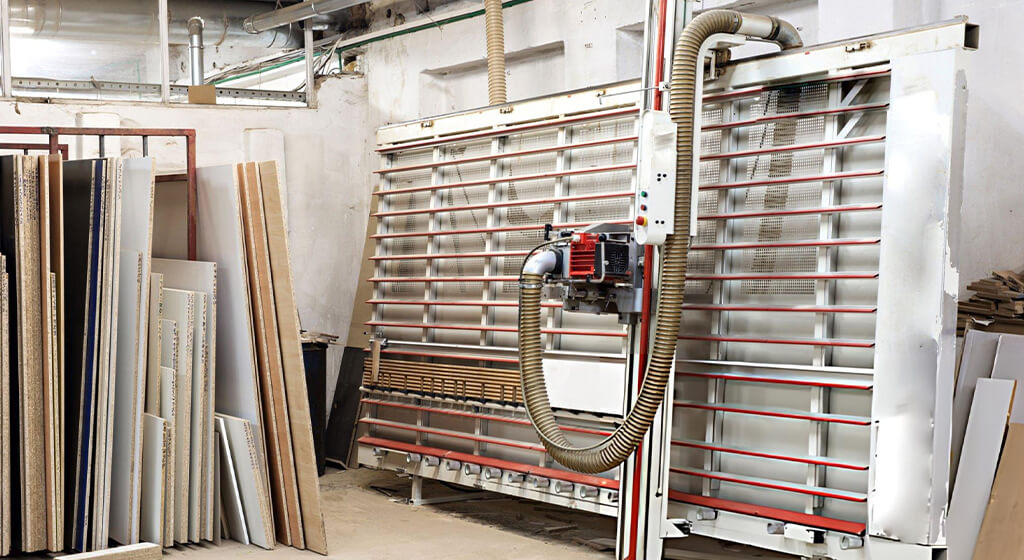
The answer depends on your production volume.
If your shop cuts fewer than five sheets daily, a track saw may be sufficient. If you process ten to fifty sheets daily, a vertical panel saw often provides excellent value. For larger factories, automated beam saws or CNC routers may become more efficient.
Many cabinet shops find that a vertical panel saw pays for itself through labor savings and improved workflow.
The return on investment often appears within one to three years.
3. How to Choose a Vertical Panel Saw?
3.1. Determine Your Production Volume First
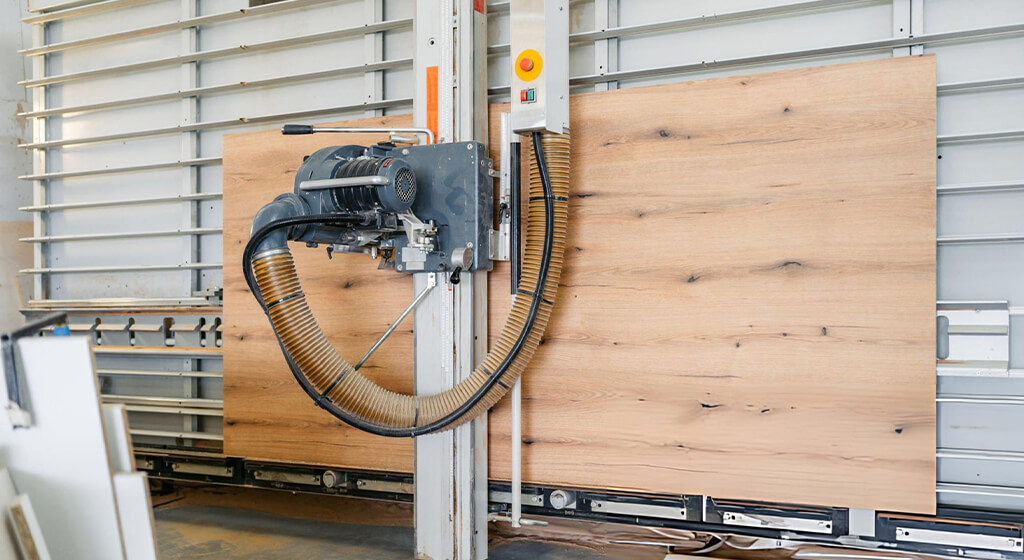
Production volume should be your first consideration. Many buyers focus on machine price. However, production requirements matter more.
Ask Yourself:
- How many sheets do you cut daily?
- How many operators handle panel processing?
- How much future growth do you expect?
A small workshop processing ten sheets daily has different needs from a factory cutting one hundred sheets daily
|
Factory |
Daily |
Recommended |
|
Small |
5–20 |
Manual |
|
Medium |
20–80 |
Industrial |
|
Large |
80+ |
Automatic |
3.2. Consider the Materials You Process
Not all panel saws are optimized for the same materials. Furniture Factories Commonly Process:
- MDF
- Plywood
- Melamine-Faced Panels
- Veneered Boards
- High-Pressure Laminate Panels
Some Manufacturers Also Process:
- PVC Sheets
- Acrylic Panels
- Aluminum Composite Materials
Material thickness affects machine selection. A laminated panels thick need a greater cutting capacity than cabinet-grade boards.
Always Review:
- Maximum Cutting Thickness
- Blade Diameter
- Motor Power
- Feed System Capability
These specifications directly impact cutting performance.
3.3. Evaluate Available Floor Space
Space limitations often drive vertical panel saw purchases. Sliding Table Saws need a large operating areas. A vertical panel saw uses wall space instead.
Before Purchasing, Measure:
- Available Wall Length
- Ceiling Height
- Operator Clearance
- Material Loading Area
Do not evaluate machine dimensions alone. Consider full operational space requirements.
3.4. Choose the Right Motor Power
Motor power influences cutting performance. Higher power allows smoother cutting through dense materials.
Typical Motor Ranges:
|
Factory Size |
Recommended Motor |
|
Small Workshop |
3–5 HP |
|
Medium Factory |
5–7.5 HP |
|
Industrial Production |
7.5–15 HP |
Large motors improve performance when cutting:
- Thick MDF
- High-Density Particleboard
- Laminated Materials
- Multiple Shifts Daily
For continuous production, investing in adequate motor capacity is essential.
3.5. Blade Quality
Many cutting problems was caused by poor blade selection. Even expensive machines produce poor results with incorrect blades.
Blade Selection:
- For Melamine Panels: Triple-Chip Grind Blades Or High-Quality Carbide Teeth
- For Plywood: Fine-Tooth Industrial Blades
- For MDF: Specialized Carbide Blades
The Correct Blade Reduces:
- Chipping
- Tear-Out
- Motor Strain
- Rework Costs
Investing in premium blades often delivers immediate improvements.
4. Top Vertical Panel Saw To Recommend
4.1. SCM Gabbiani V Vertical Panel Saw
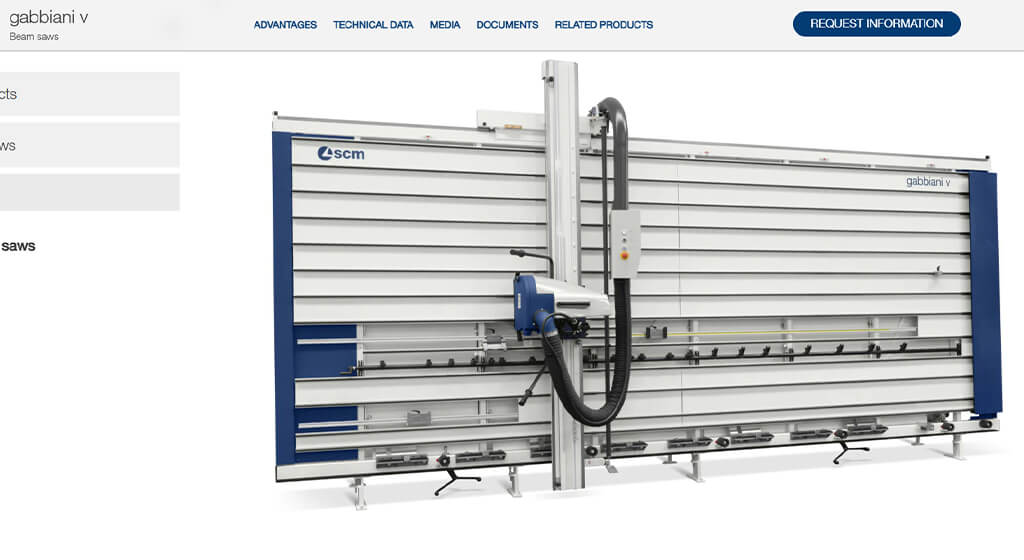
SCM Gabbiani V is a professional vertical panel saw designed for furniture manufacturers, cabinet shops, and woodworking companies.
Built by SCM, one of the world’s leading woodworking machinery manufacturers, the Gabbiani V combines cutting accuracy, reliability, and space efficiency. The machine is capable of performing both horizontal and vertical cuts using a single main saw blade, with optional Widia grooving knives for additional machining flexibility.
Key Features
- Compact design for space-saving installations
- Heavy-duty electro-welded steel frame
- Horizontal and vertical cutting capability
- Optional Widia grooving knives
- High cutting precision for furniture production
- Reliable industrial construction
Specification
|
|
V25 |
V32 |
V42 |
V53 |
|
|
Max.
Length Of Horizontal Cut |
mm |
2500 |
3200 |
4200 |
5300 |
|
Max.
Length Of Vertical Cut |
mm |
2200 |
3200 |
4200 |
5200 |
|
Max.
Height Of Vertical Cut |
mm |
1600 |
1900 |
2200 |
2200 |
|
Max.
Height Of Horizontal Cut |
mm |
1400 |
1700 |
2080 |
2100 |
|
Max.
Cutting Thickness |
mm |
60 |
60 |
60 |
80 |
|
Motor Power |
kW |
3,7 |
3,7 |
3,7 |
5,6 |
|
Blade Diameter |
mm |
250 |
250 |
250 |
300 |
|
Rotating
Speed |
rpm |
5300 |
5300 |
5300 |
5000 |
|
Mechanical
Positioners For Horizontal Cuts |
|
4 |
4 |
4 |
4 |
|
Stops For
Vertical Cuts |
|
1 |
1 |
1 |
2 |
4.2. Putsch® Meniconi SVP 133 BABY
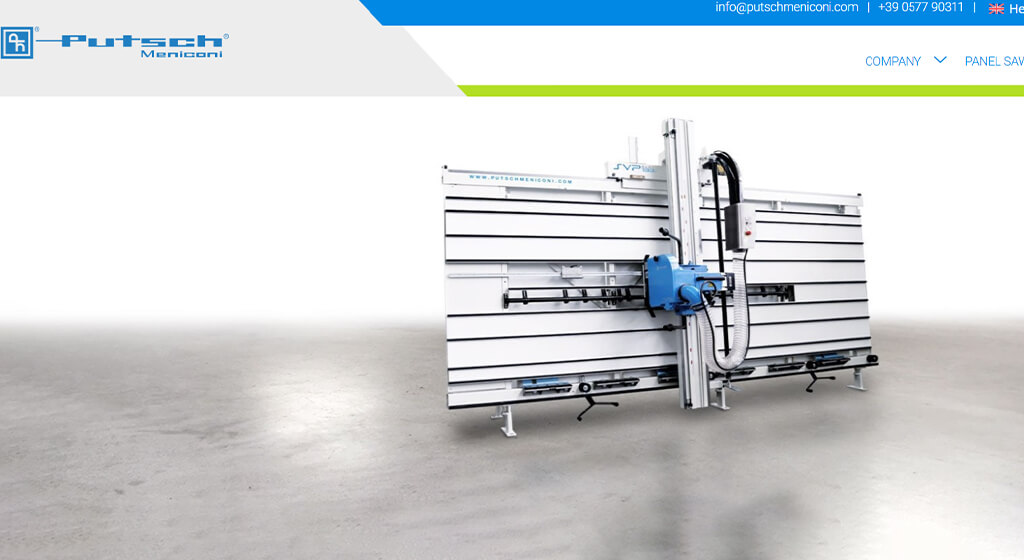
Putsch Meniconi SVP 133 BABY is a compact industrial vertical panel saw designed for small and medium-sized furniture manufacturers.
It provides a cutting capacity of 2500 mm × 1600 mm with a maximum cutting depth of 60 mm.
The SVP 133 BABY is particularly popular among workshops looking to maximize production while minimizing floor space requirements.
Key Features
- Electric shifting frame
- Additional knocker system
- Short-piece cutting sled
- Compact footprint
- High cutting accuracy
- Easy panel handling
- Ideal for space-constrained workshops
4.3. Harwi Helios 60 Vertical Panel Saw
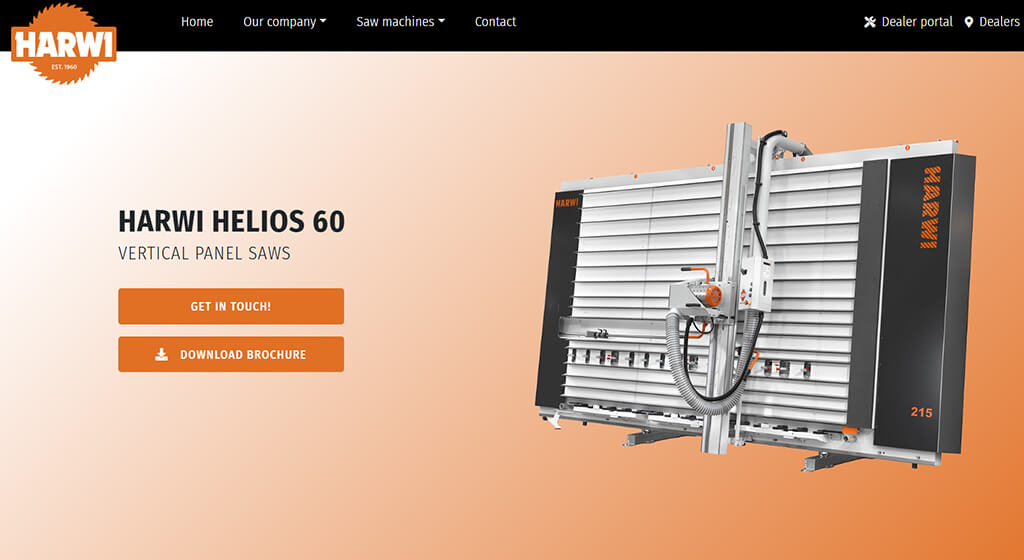
Harwi Helios 60 is a heavy-duty vertical panel saw. Powered by an IE3 energy-efficient 4 kW motor, the Helios 60 delivers a blade speed of 5000 RPM through its indirect drive system.
The combination of a robust frame structure and a highly stable saw beam ensures excellent accuracy, even during continuous production.
Key Features
- IE3 energy-efficient 4 kW motor
- 5000 RPM indirect drive system
- Heavy-duty steel frame construction
- Stable saw beam for accurate cuts
- Repeat-cut stop system
- Horizontal cutting stops
- Ergonomic operating handle
4.4. Safety Speed EF5 Vertical Panel Saw
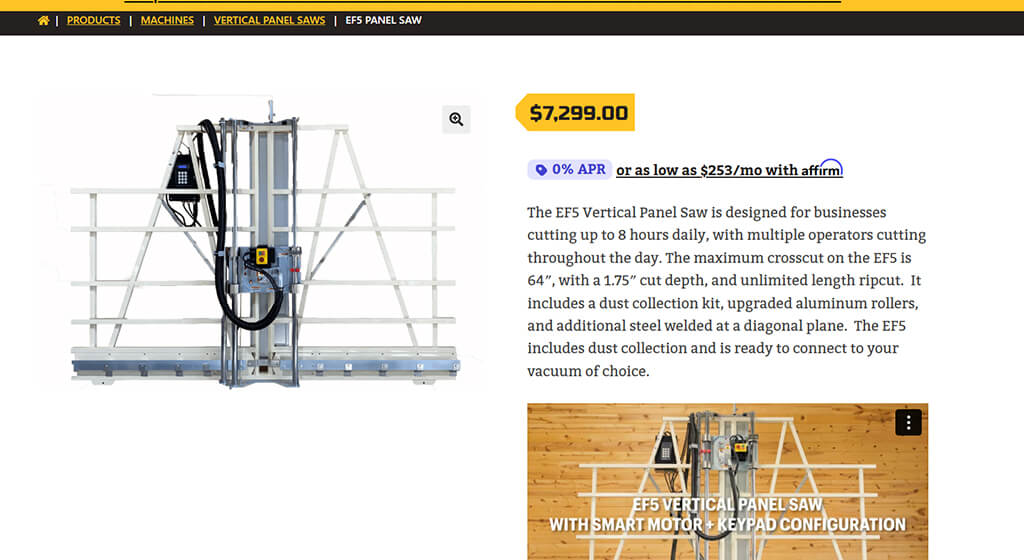
Safety Speed EF5 is designed for industrial use. EF5 can efficiently process panels for up to eight hours daily. It offers a maximum crosscut capacity of 64 inches, a cutting depth of 1.75 inches, and unlimited rip-cut capability.
Key Features
- Unlimited rip-cut length
- Integrated dust collection system
- 10-foot welded steel frame
- Chrome-plated guide tubes
- Aluminum material rollers
- Quick change from vertical to horizontal cutting
- Enclosed counterweight system
- Adjustable measurement scales
4.5. STRIEBIG 4D Automatic Vertical Panel Saw
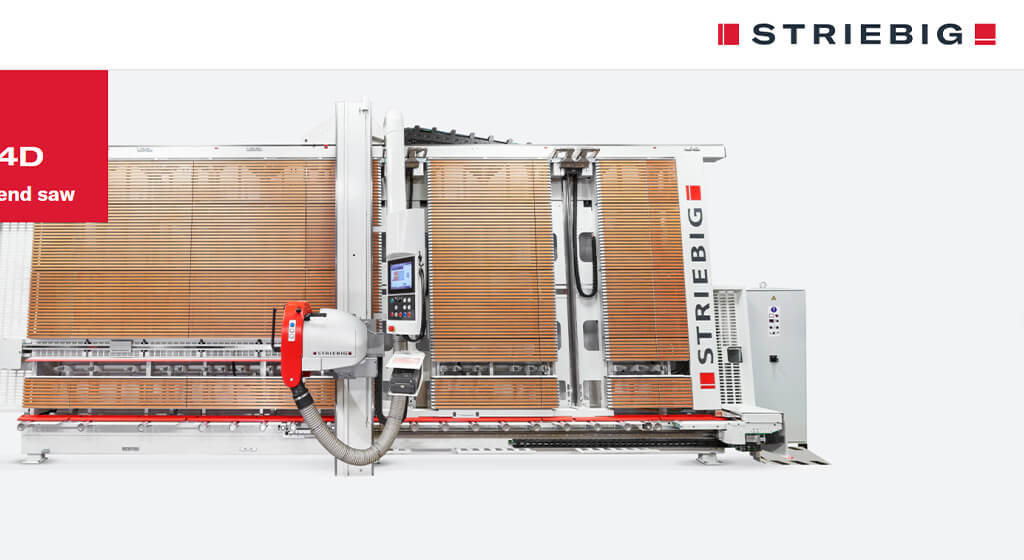
STRIEBIG 4D is the highest level of vertical panel saw technology currently available. It combines fully automatic material handling, intelligent cutting optimization, and exceptional cutting precision.
The machine allows a single operator to process large panels efficiently through automated vertical and horizontal panel movement systems.
Advanced software-driven optimization ensures maximum material utilization while reducing operator workload and production errors.
For manufacturers producing large quantities of cabinet and furniture components, the STRIEBIG 4D is often considered the benchmark in vertical panel cutting technology.
Key Features
- Fully automatic panel lowering system (PAV)
- Automatic programmable panel feeder (PPS)
- 0.1 mm positioning accuracy
- ExpertCut 4D cutting optimization software
- Automated cutting sequence generation
- Label printing integration
Specification
|
Weight Of The Saw |
approx. 1.800 kg |
|
Cutting Depth |
80 mm *1 |
|
Saw Motor Power |
5.5 kW (7.5 HP) |
|
Saw Blade Diameter |
300 mm *2 |
|
Saw Blade Bore |
30 mm *3 |
|
Emission Sound Pressure Level At The
Workplace Lpa |
83 dB *4 |
|
Saw Blade Speed |
4800 rpm |
|
1 Extraction Connection |
ø 140 mm |
|
Compressed Air Connection |
6-10 bar |
|
Wattage (Incl. PAV/PPS) |
9.1 kW |
|
Mains Connection |
3 x 400 V / 50 Hz |
5. Vertical Panel Saw and Sliding Table Saw
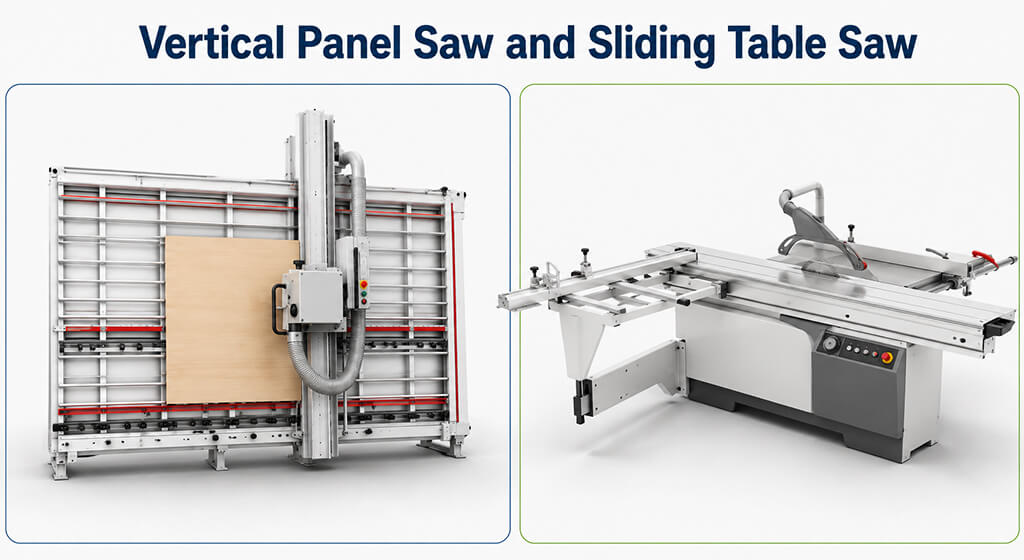
Many
furniture manufacturers compare Vertical Panel Saw and Sliding Table Saw before
purchasing.
Both Have Advantages.
|
Feature |
Vertical Panel Saw |
Sliding Table Saw |
|
Space Requirement |
Excellent |
Moderate |
|
Panel Handling |
Excellent |
Good |
|
Accuracy |
High |
Very High |
|
Solid Wood Processing |
Limited |
Excellent |
|
Angle Cutting |
Limited |
Excellent |
|
Ease of Use |
High |
Moderate |
Furniture factories focusing primarily on sheet materials often prefer vertical panel saws.
Factories processing significant solid wood may prefer sliding table saws.
6. Vertical Panel Saw vs CNC Router
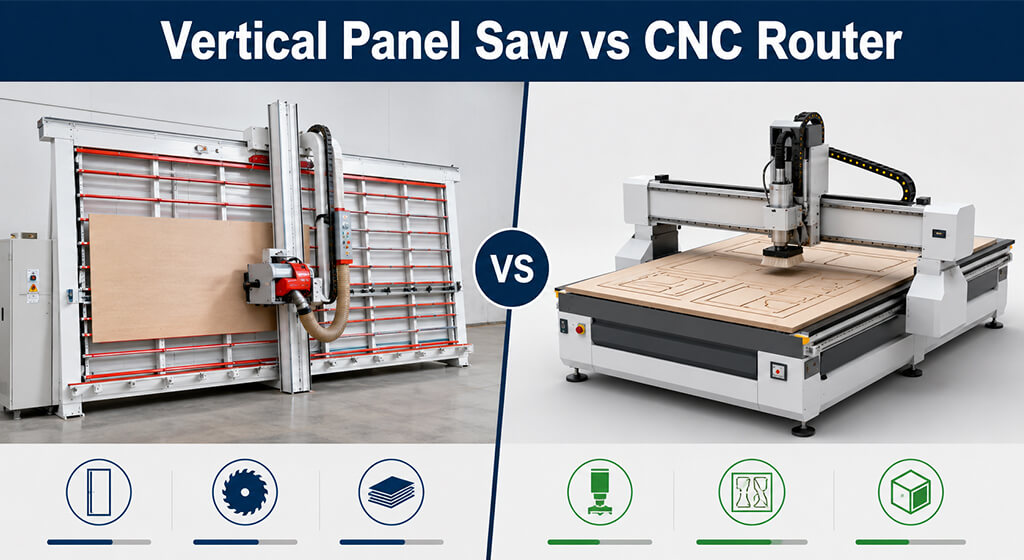
A vertical panel saw is good at fast, efficient sheet processing. It offers a lower investment, easier operation, and excellent space utilization. A CNC router provides automation, flexibility, and multi-process machining.
|
Feature |
Vertical
Panel Saw |
CNC
Router |
|
Primary
Function |
Straight
panel cutting |
Multi-process
machining |
|
Initial
Investment |
Low to
Medium |
Medium
to High |
|
Floor
Space Required |
Low |
Medium
to High |
|
Operator
Skill Level |
Low |
Medium |
|
Cutting
Speed |
Very
Fast |
Moderate |
|
Complex
Shape Cutting |
No |
Yes |
|
Drilling
Capability |
No |
Yes |
|
Grooving
Capability |
Limited |
Yes |
|
Nesting
Optimization |
No |
Yes |
|
Automation
Level |
Low to
Medium |
High |
|
Production
Flexibility |
Moderate |
Excellent |
If your primary goal is breaking down plywood, MDF, and melamine sheets quickly, a vertical panel saw is often the smartest first investment.
If your goal is automation, nesting, drilling, and complex machining, a CNC router will deliver greater long-term value.
7. Common Vertical Panel Saw Problems and How to Fix Them
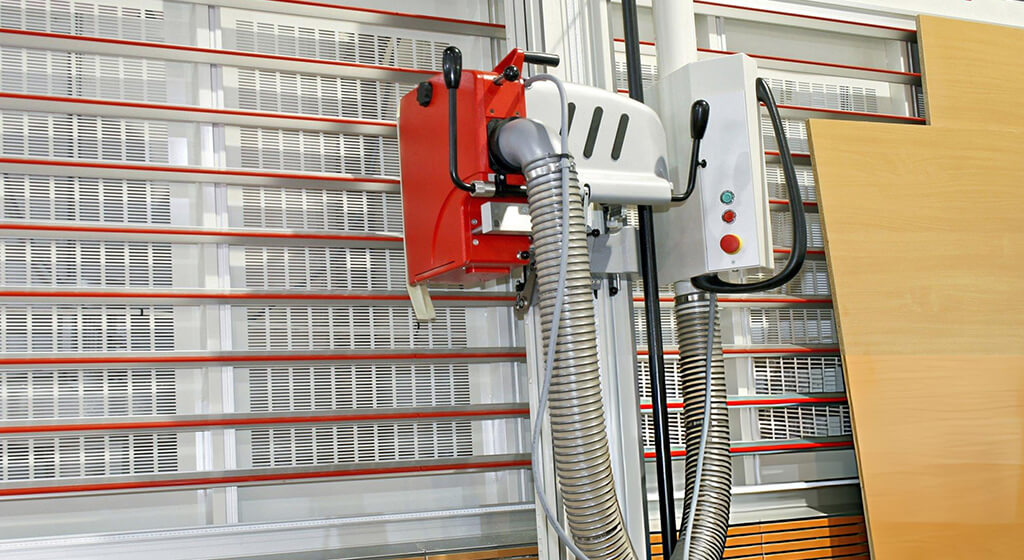
Vertical panel saws are reliable machines used in furniture factories and cabinet shops. However, they can experience performance issues over time.
|
Problem |
Recommended Solutions |
|
Cuts Are Not Square |
|
|
Chipping on Melamine Panels |
|
|
Rough Cut Edges |
|
|
Blade Wandering During Cuts |
|
|
Inconsistent Cut Dimensions |
|
|
Excessive Machine Vibration |
|
|
Carriage Movement Is Difficult |
|
|
Motor Overheating |
|
|
Dust Collection Is Poor |
|
|
Material Slips During Cutting |
|
|
Blade Burns Material |
|
|
Panel Surface Scratches |
|
8. Vertical Panel Saw Maintenance
8.1. Clean Dust and Debris
Wood dust can accumulate on guide rails, rollers, and moving components. Excessive dust buildup may cause poor carriage movement and reduced accuracy.
Recommended Actions
8.2. Inspect Saw Blade
The blade is the most critical cutting component. A dull blade can cause chipping, burn marks, and rough edges
Check For:
8.3. Inspect Rollers and Bearings
Rollers and bearings support carriage movement. Worn components can cause vibration, misalignment, and rough cutting
Check For
8.4. Verify Machine Alignment
Alignment directly affects cut accuracy. Over time, vibration may cause slight movement.
Check
8.5. Lubricate Moving Components
Many vertical panel saws contain moving parts requiring lubrication.
Examples Include:
- Carriage Systems
- Bearings
- Guide Mechanisms
- Sliding Components
8.6. Inspect Support Strips
Support strips protect panels during cutting.
Damaged Strips May Cause:
- Surface Scratches
- Material Movement
- Reduced Accuracy
Replace worn strips before they affect production quality.
9. Recommended Related Products
9.1. Vertical CNC Router
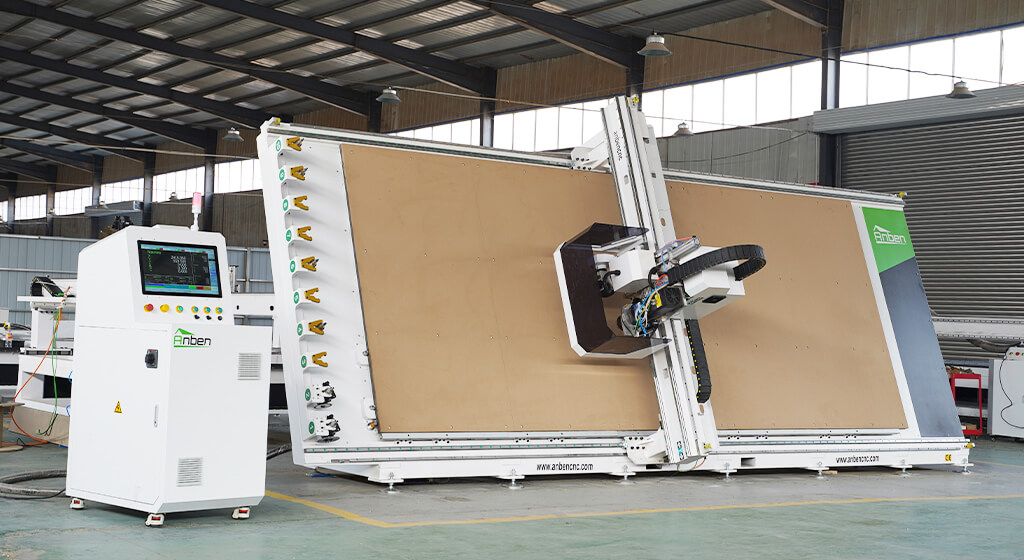
Vertical CNC Router is the latest innovation designed for modern furniture factories that need high productivity in a compact workspace.
This machine is engineered to handle heavy-duty daily production while maintaining exceptional accuracy and speed. It is widely used in cabinet manufacturing, custom furniture production, and panel processing industries.
Key Features
- Long-Lasting Industrial Performance: heavy-duty square tube steel frame
- High-Precision Cutting System: advanced rack and pinion transmission, Germany ASK #25 linear guide rails, and a vacuum adsorption table
- High-Speed Operation: Maximum rapid travel speed of 50,000 mm/min
- Powerful Spindle System: Italy HSD 9KW air-cooled spindle
- Smart Control System: Taiwan SYNTEC 60W-E controller
9.2. Wood Panel Transport Cart
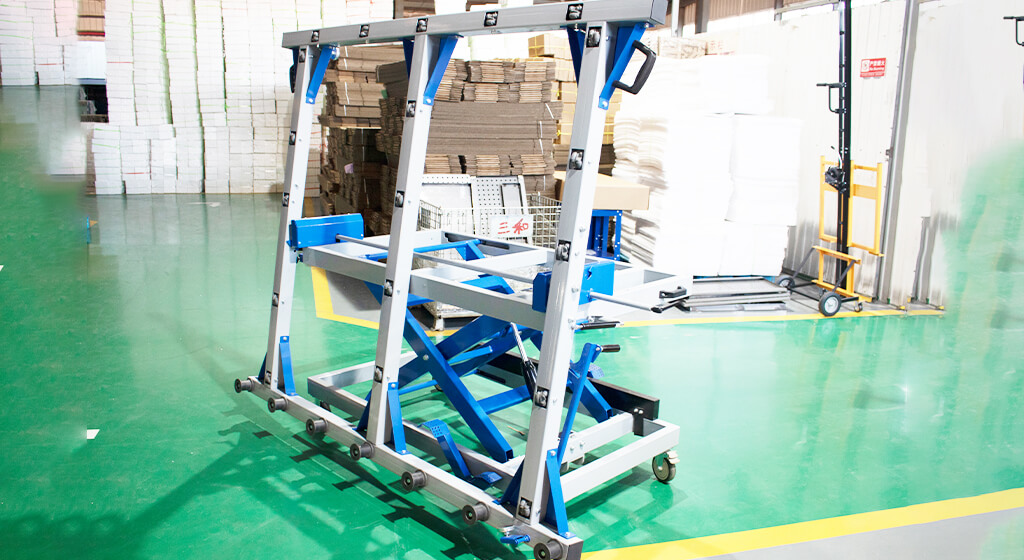
Wood Panel Transport Cart is a multifunctional material handling solution designed for modern woodworking factories. It significantly improves efficiency in panel movement, stacking, and loading/unloading operations.
It is especially useful for workflows involving vertical panel saws, CNC routers, sliding table saws, and edge banding machines.
Key Features
10. Final Thoughts
A vertical panel saw is one of the smartest investments for sheet material processing. It combines space efficiency, operator safety, and productivity.
For cabinet shops, the machine often delivers an excellent balance between cost and performance.
It will not replace every machine in the workshop. However, it can dramatically improve workflow.
Before buying, evaluate your production volume, available space, and future growth plans. The right machine can increase efficiency for many years.
As demand for custom furniture continues growing, vertical panel saws will remain a valuable solution for modern woodworking operations.